



Kopa, a new indoor racket sports club in Montreal’s Pointe-Saint-Charles neighbourhood, has opened inside a converted 20,000-square-foot industrial building, the work of Montreal studio Ivy Studio, on a renovation budget of $2 million Canadian. The figure is notable mostly for how far it appears to have stretched: what it has produced reads closer to a members’ club than a public sports venue.
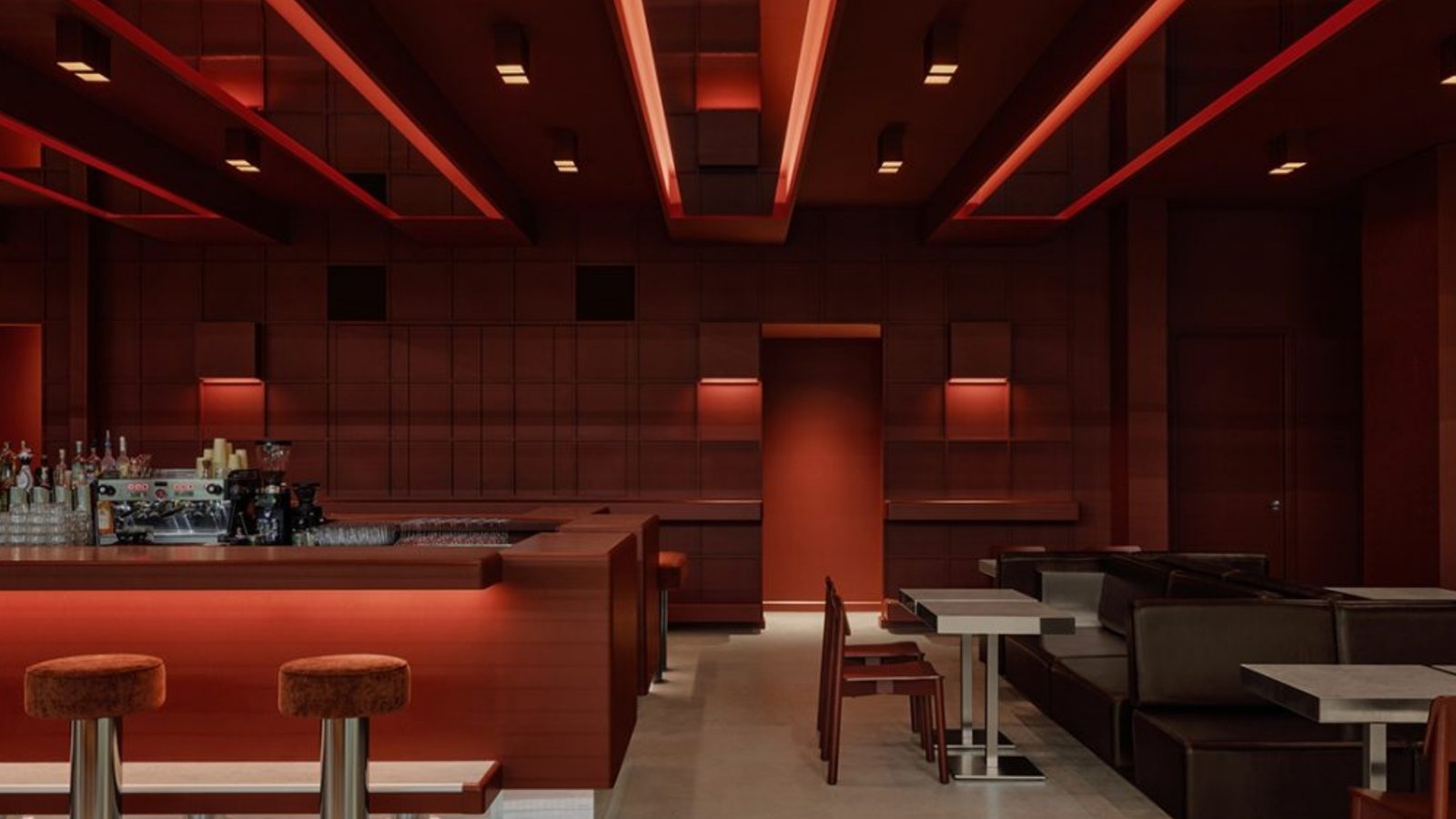
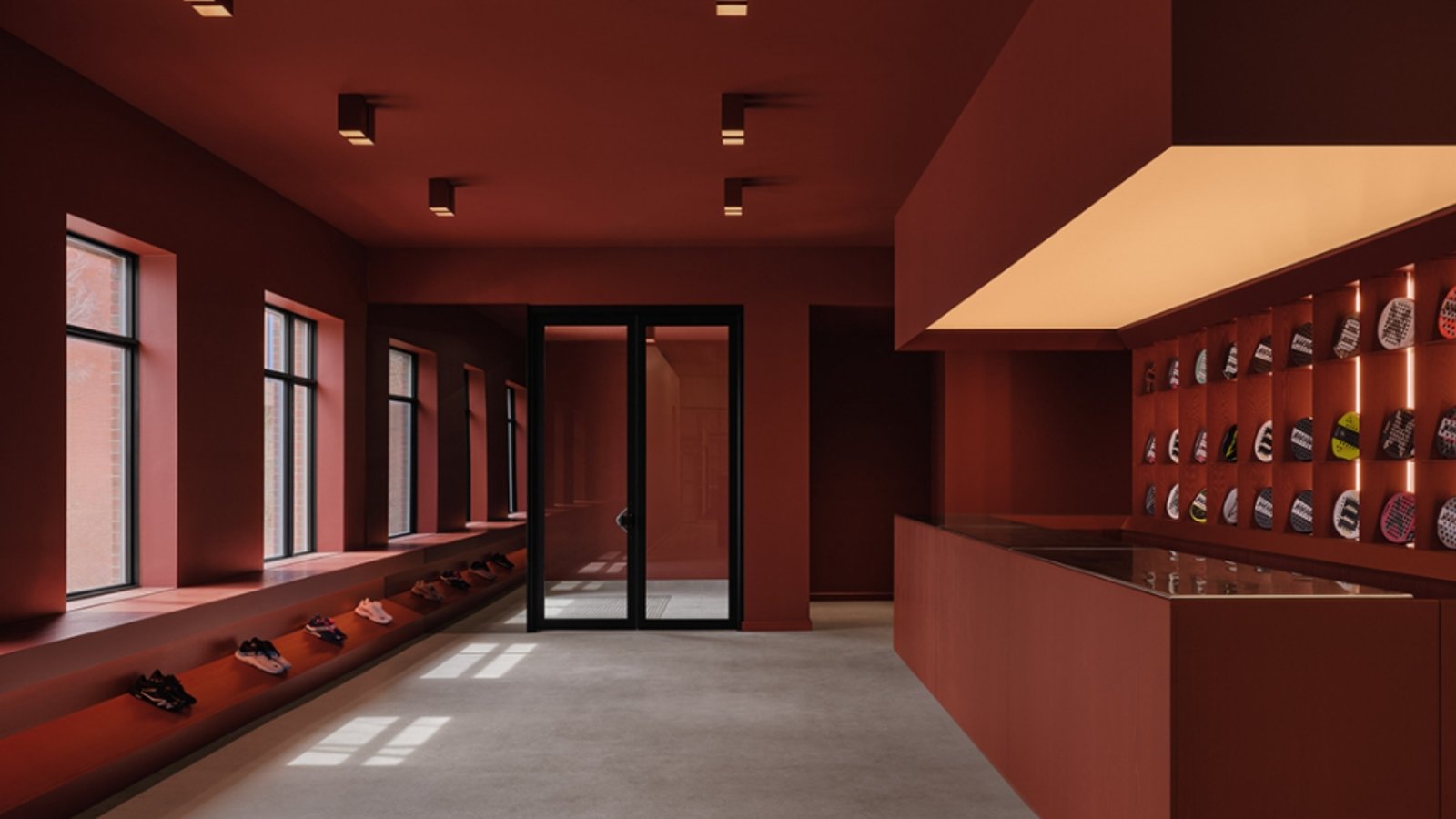
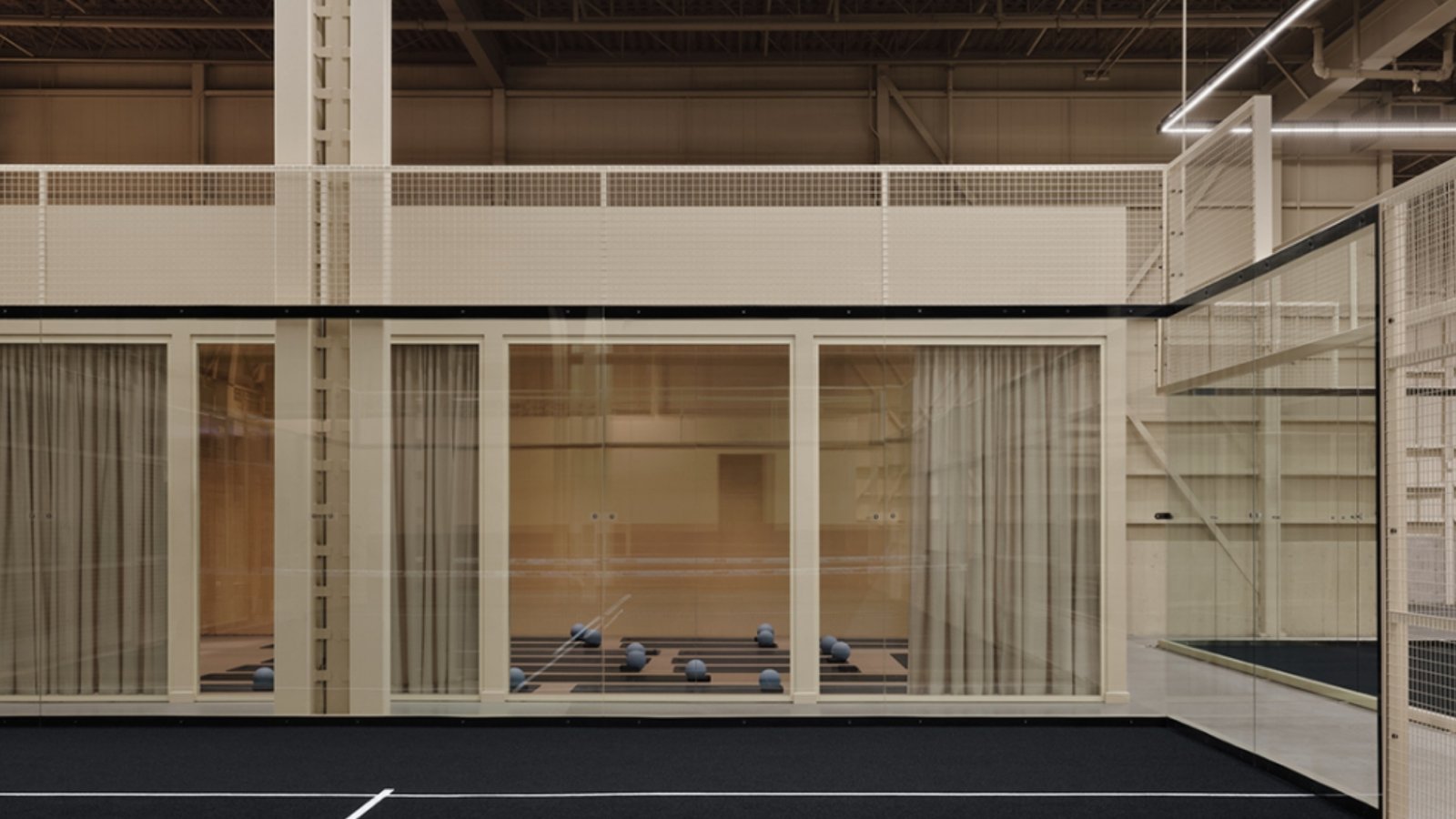
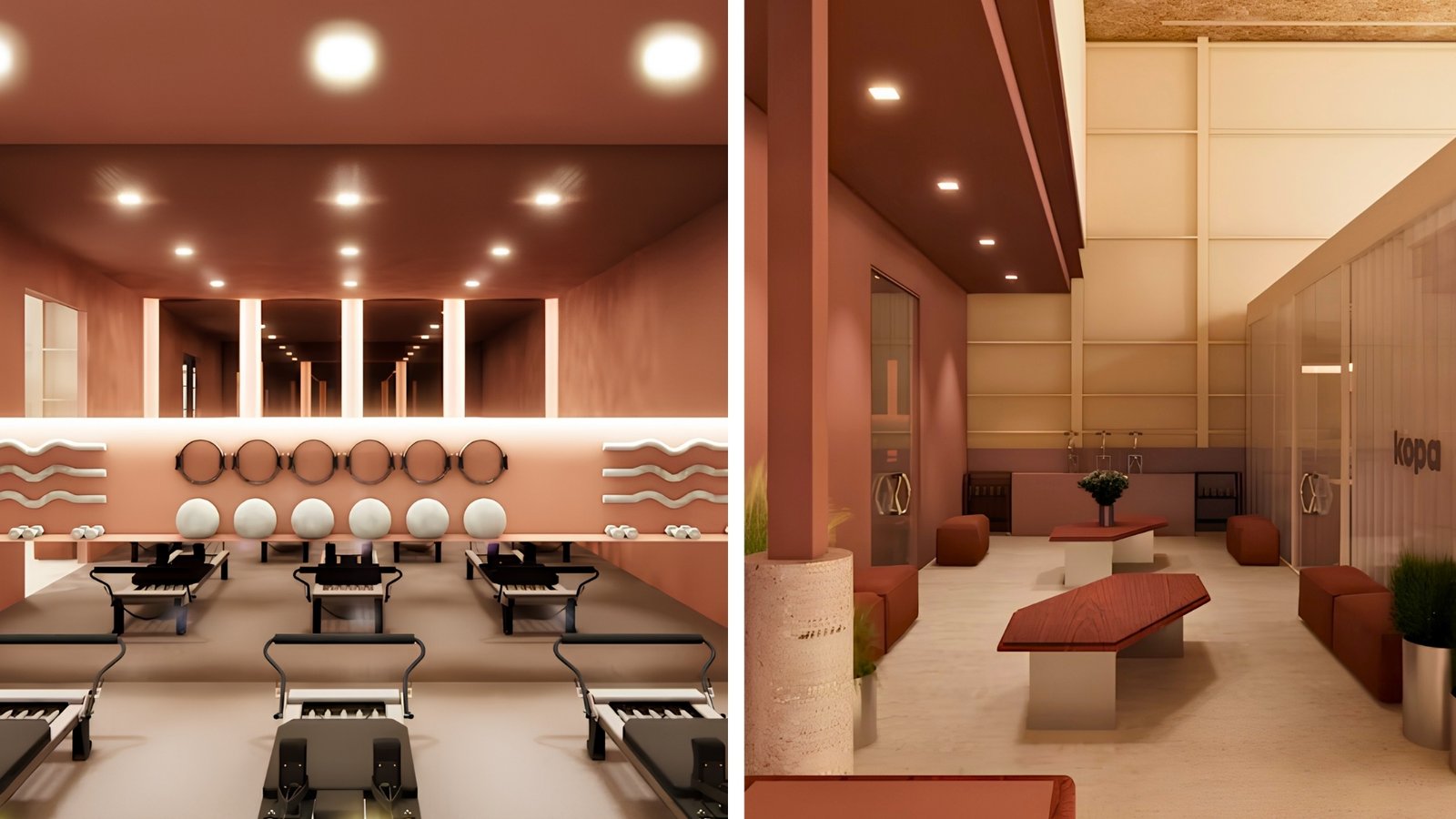
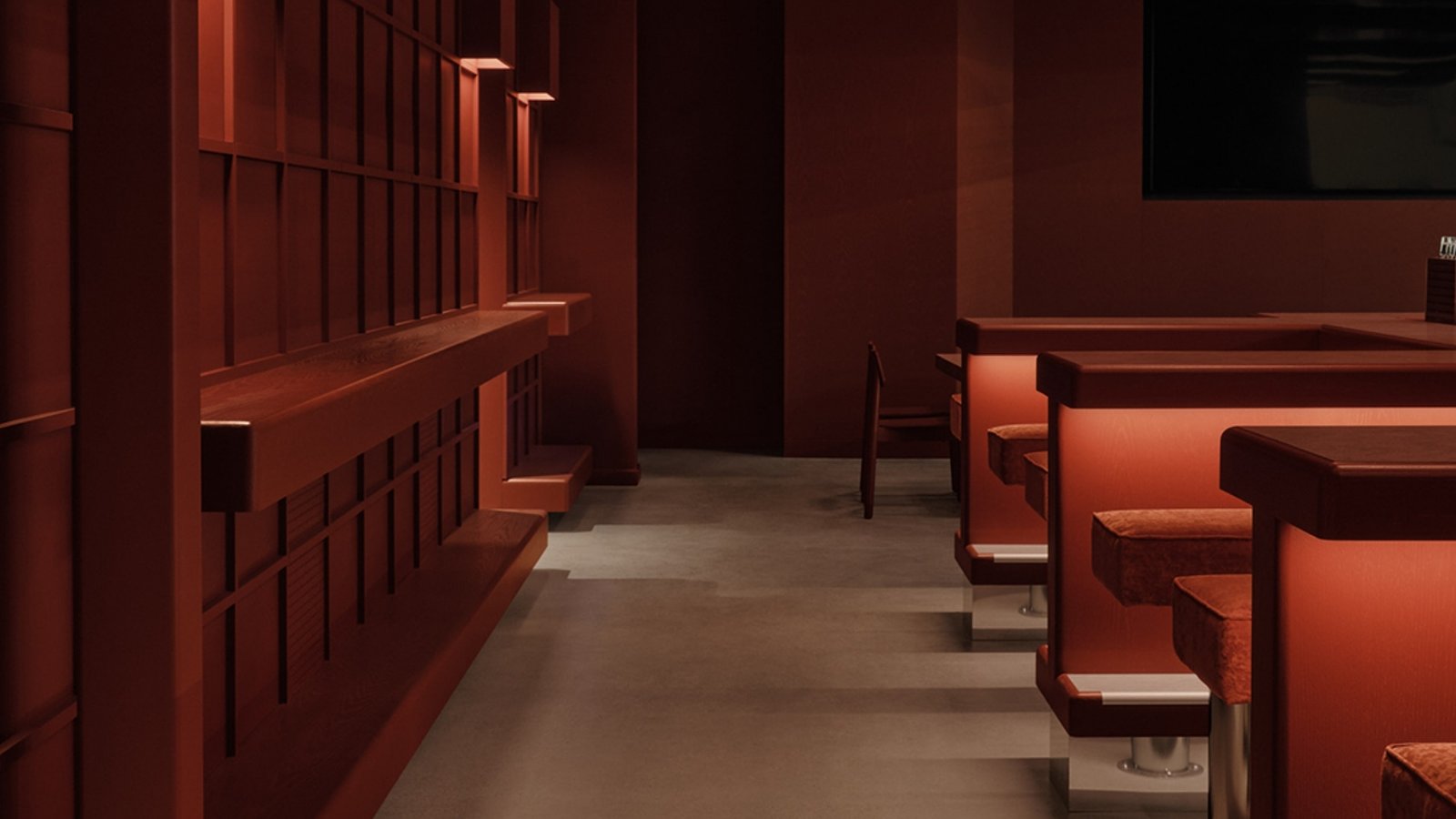
The design turns on a single decision: a radical colour split dividing the building in two. The athletic hall rises to a 24-foot ceiling, wrapped head to toe in warm beige, from courts and metal framing to an acoustically finished ceiling, with the original polished concrete slab and a raw foundation wall left as a nod to the building’s manufacturing past. Descend into the 12-foot hospitality wing and the palette inverts entirely: reception, the sanitary block and the social lounge run floor to ceiling in a deep, saturated burgundy, from a red-stained oak reception counter and backlit racket niches to a central bar, red velvet stools and leather banquettes, lit dim enough to read closer to a late-night bar than a post-match lounge.

The athletic offer is substantial: four professional padel courts, a pickleball court and a glass-enclosed fitness room, supported by custom red-stained wood bleachers arranged as a two-tier structure between courts and lounge and a larger three-tier grandstand along the southern perimeter. A glass-enclosed wellness hub at the rear houses mat pilates, yoga and a reformer room, with the pilates studio able to be enclosed behind a deeply pleated beige curtain when privacy is called for.
What distinguishes Kopa from the wave of padel clubs currently opening across North America is the degree to which its hospitality programme has been treated as equal in ambition to its athletic one, rather than an amenity bolted on afterward.
That balance sits inside a broader pattern in how padel operators are now approaching design. Early North American padel adoption relied heavily on converted tennis courts and utilitarian, gym-adjacent build-outs; the current wave, of which Kopa is a considered example, treats the club as social infrastructure in its own right, with architecture doing as much work as the sport to justify membership. Operators increasingly bet on a club’s social currency, not just its court count, to drive both initial sign-up and repeat visitation.
The $2 million Canadian budget for a full gut renovation of 20,000 square feet is, by design-led hospitality standards, modest, which makes the clarity of the finished concept more notable than the spend behind it. That combination, architectural ambition delivered on a comparatively contained budget, raises an open question for a sport still working out what its built environment should look like: whether it is repeatable as more operators enter the category, or whether Kopa’s result depends on a level of design conviction that does not scale easily.

For a city with an established design culture and a fast-growing padel community, Kopa’s arrival tests something more specific than demand for the sport itself: whether Montreal’s appetite for design-forward hospitality extends naturally to a sports club, or whether that appetite still needs to be built one considered space at a time. Visit Kopa here.