


When Aman opened a members club in New York, it charged $200,000 to join. Not for the rooms. Not for the restaurant. For the filter. That number explains why the private members club has become one of the most consequential forces in global real estate. The $200,000 is not a price. It is a selection mechanism. It determines who is in the room. And who is in the room determines what happens to the real estate around it. The buildings are often exceptional. The hospitality is world-class. The interiors are meticulously designed. None of those things explain why the neighbourhoods around the world’s most significant clubs increasingly trade at a premium. The value lies in the network — and in the capital, relationships and decisions that circulate through it. The strongest clubs no longer operate simply as places to socialise. They attract founders, investors, developers and operators whose decisions shape where capital flows next. Read correctly, a members club is not a lifestyle amenity. It is an early indicator of future investment. This report ranks ten clubs through that lens — not by exclusivity, heritage or design, but by three criteria: network density, real estate impact and capital signal. Together they explain why the world’s most significant clubs deserve to be analysed differently. They are no longer simply places to meet. They have become indicators of where capital is concentrating, how cities are being repriced and where the next cycle of investment is already beginning.
The Access Report — ten clubs ranked by capital influence
Ten Clubs.
Ten distinct models.
One consistent pattern.
The most strategically significant — are not the most famous ones.
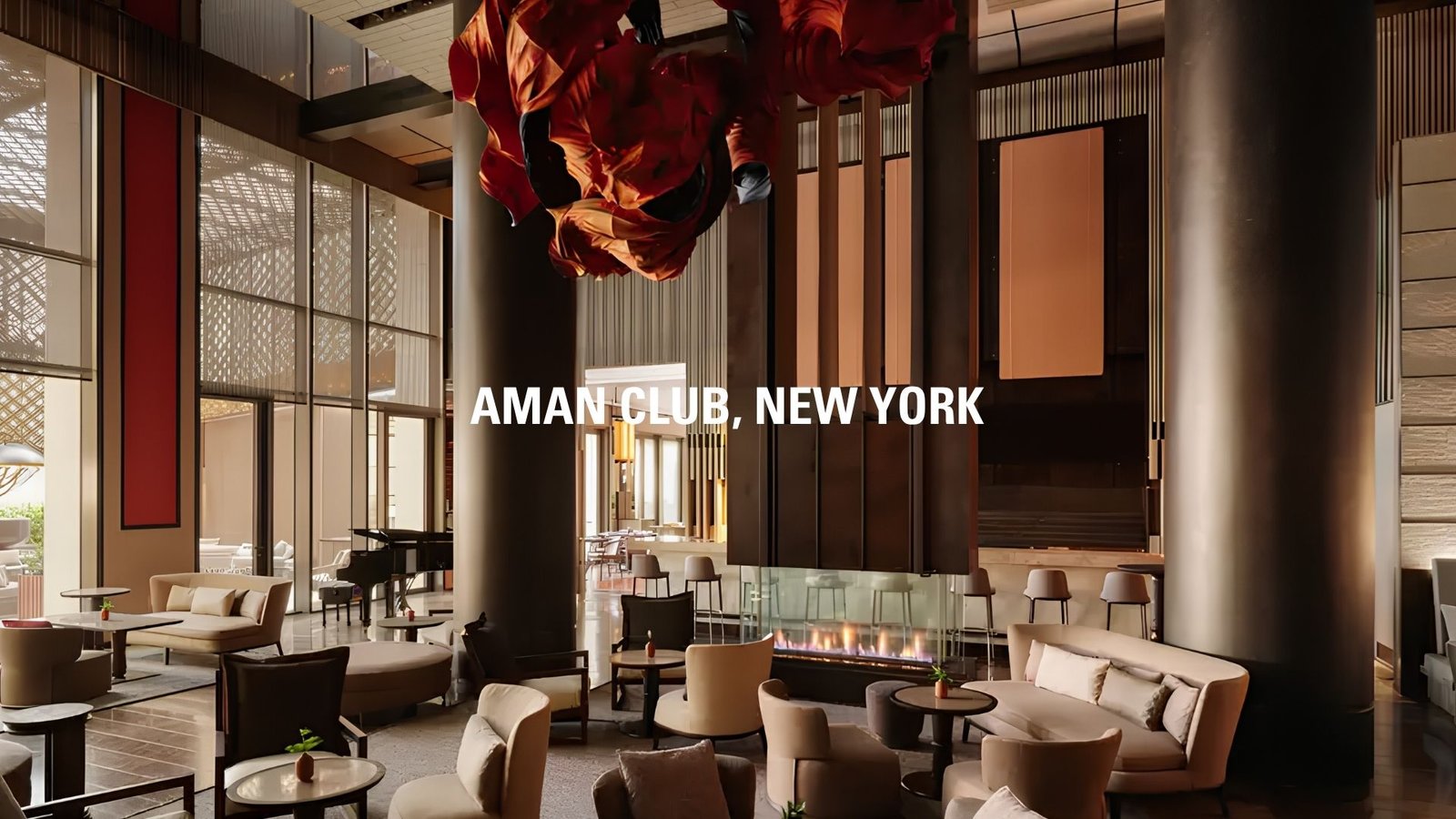
Aman Club · New York.
Opened 2022 · Crown Building, Fifth Avenue · Initiation fee: $200,000 · Annual dues: approximately $15,000.
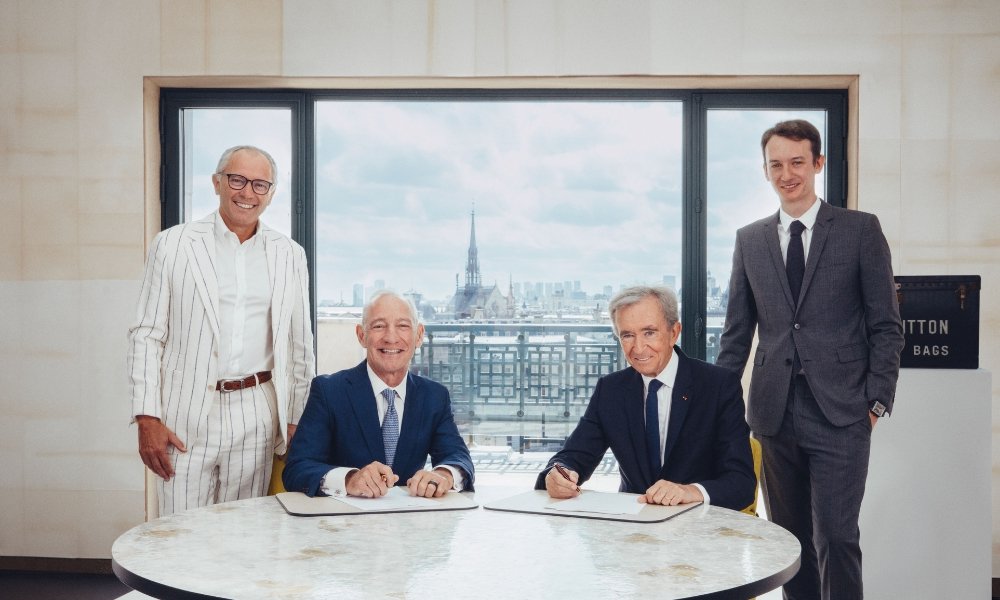
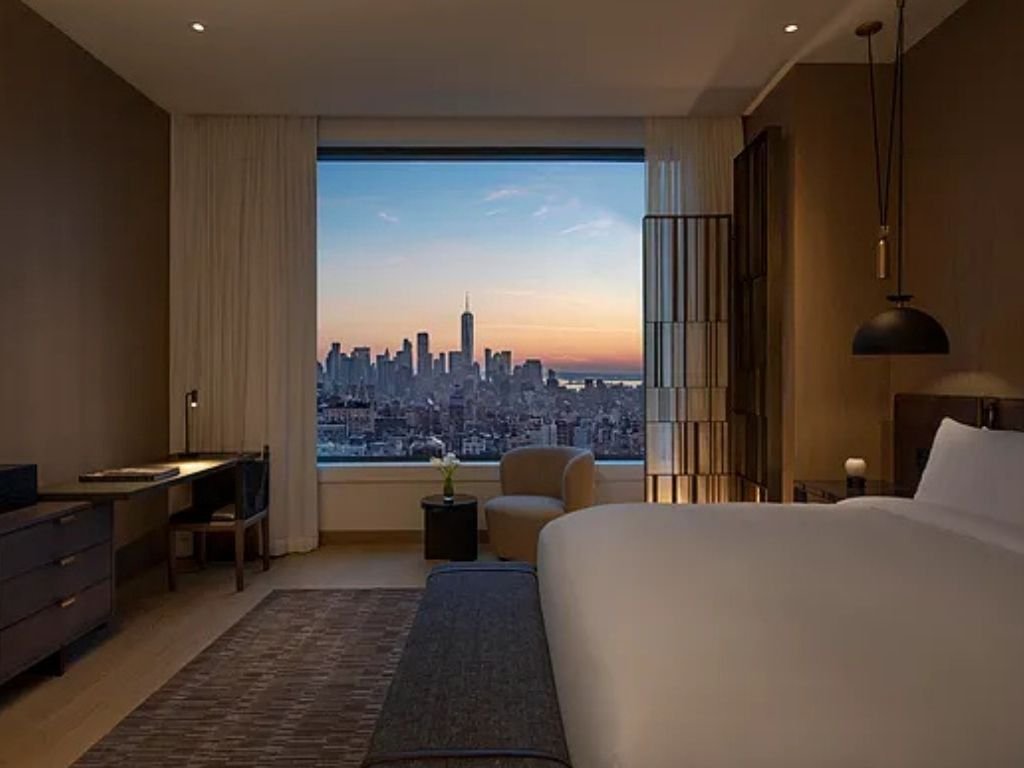
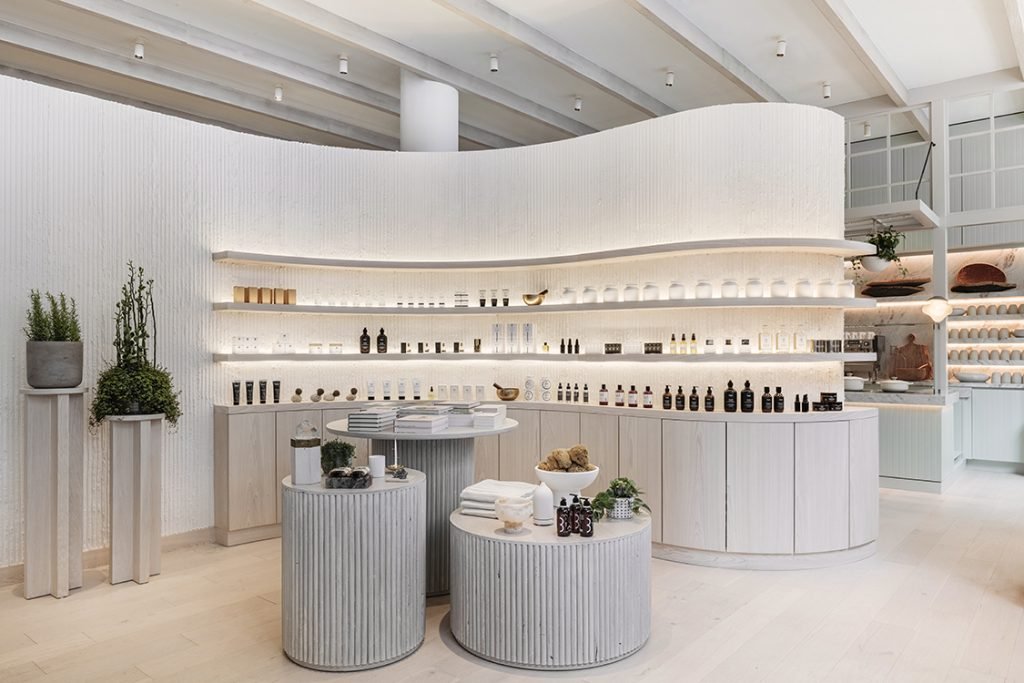
Aman Club sits at the top of this Index because it demonstrates that the value of a members club lies in the network it protects rather than the revenue it generates. The $200,000 initiation fee is not designed to maximise membership but to curate it — creating one of the highest concentrations of ultra-high-net-worth individuals within any urban hospitality platform.
That philosophy extends beyond the club itself. Located within the Crown Building, Aman Club forms part of an integrated ecosystem of hotel, residences and private amenities, where membership strengthens residential demand and ownership reinforces the exclusivity of the network. The club therefore functions as infrastructure for the wider Aman brand rather than a standalone hospitality offering.
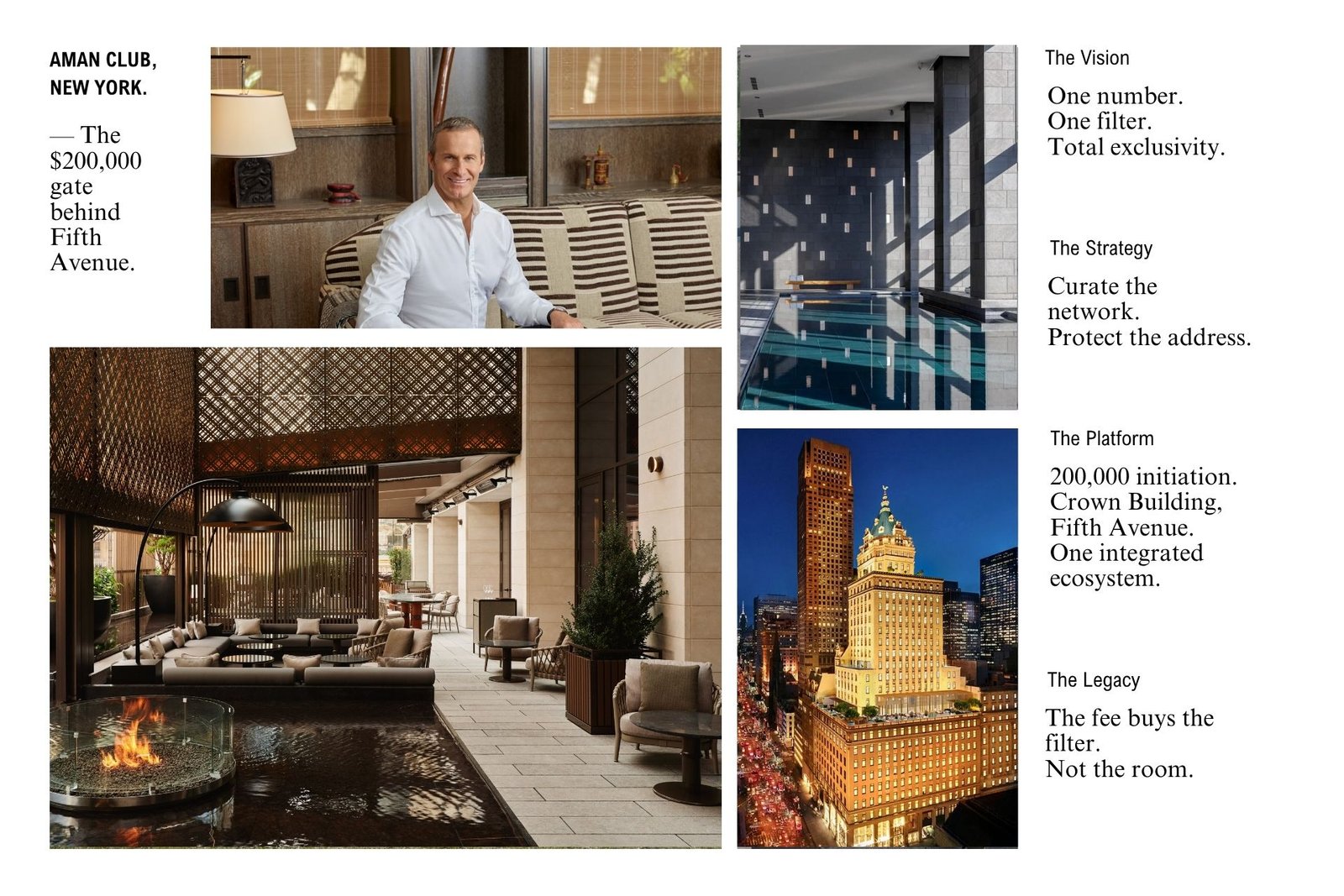
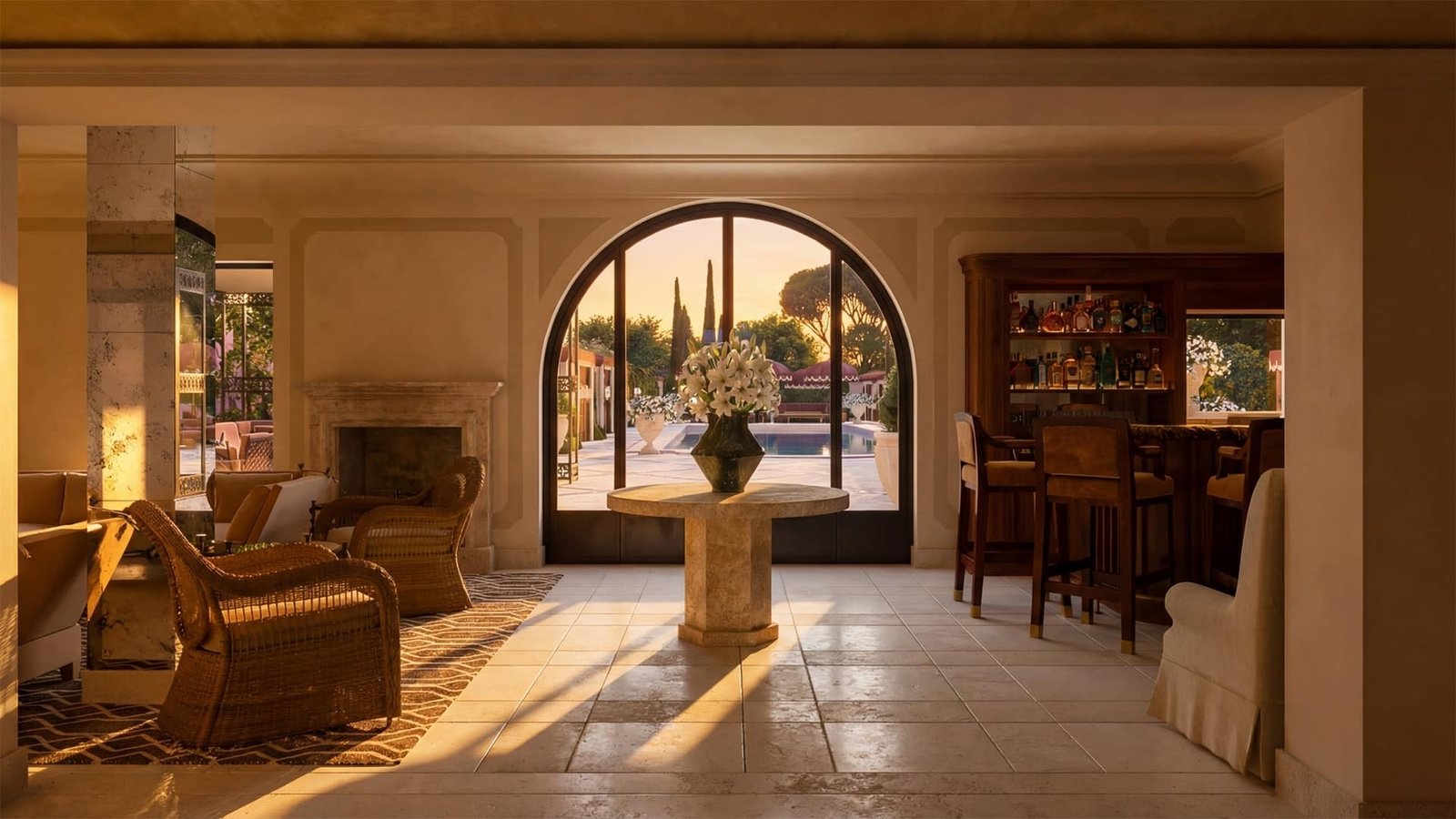
Aman Club, Crown Building, New York — $200,000 buys the filter, not the room.
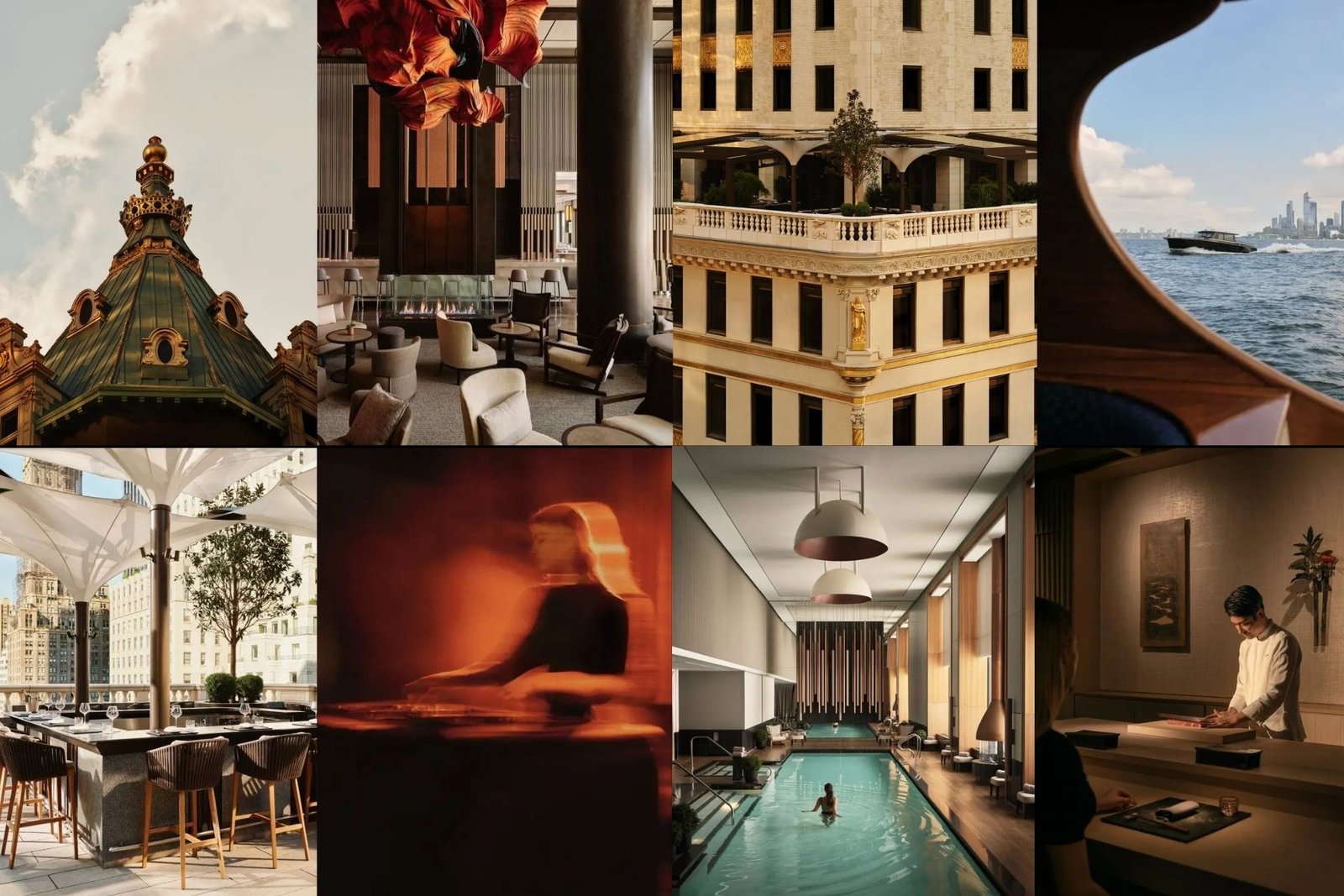
Its strategic significance is amplified by Aman’s measured global expansion. Every new members club represents a long-term judgement about where wealth is concentrating before the wider market recognises the trend. In that sense, Aman Club is more than an exclusive address. It is one of the clearest capital signals in global hospitality — demonstrating how carefully curated networks increasingly shape residential value, investment confidence and the future geography of luxury real estate.
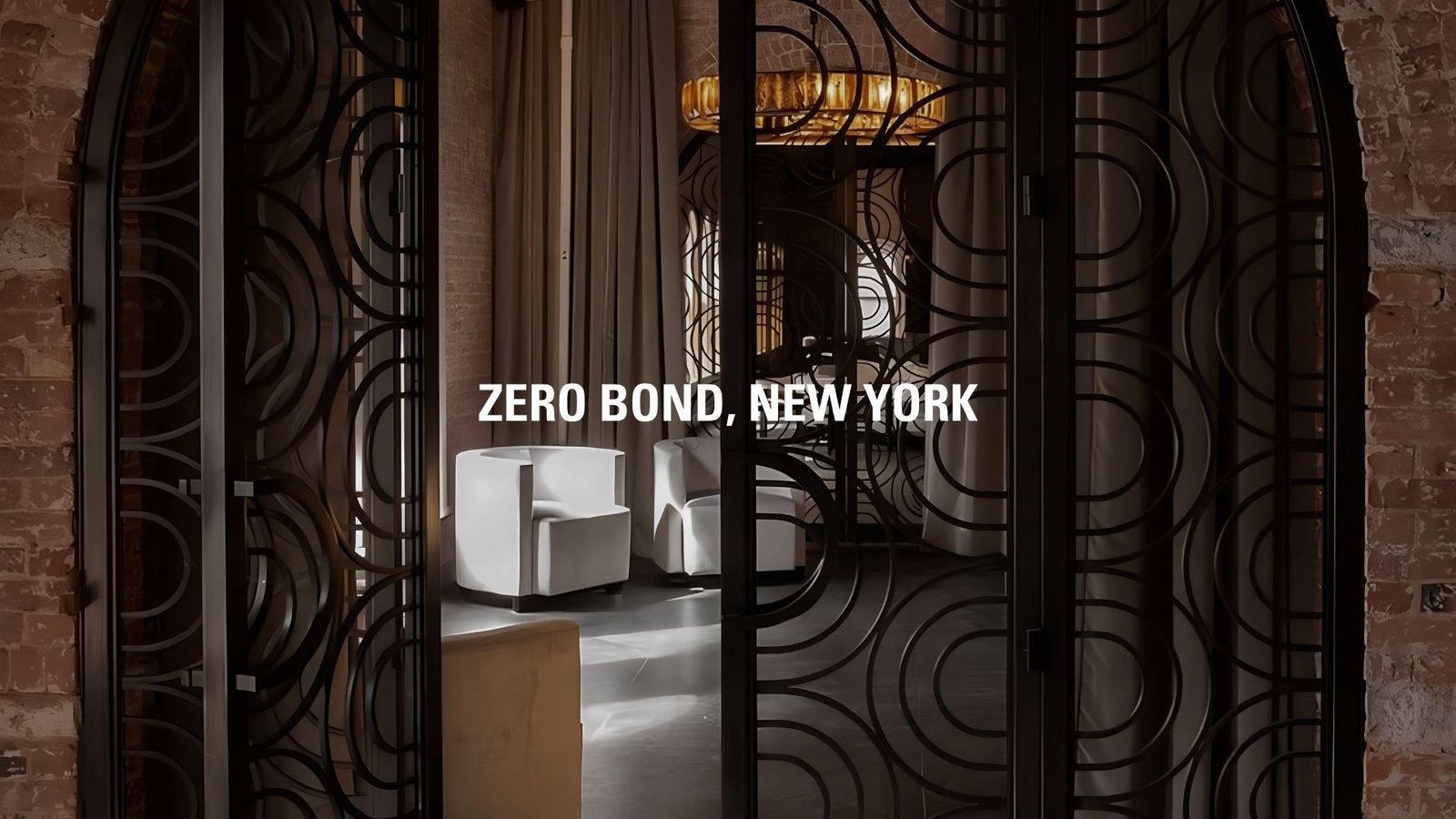
Zero Bond · New York
Founded 2019 · NoHo, Manhattan · Initiation fees from approximately $750 to $5,000 · Annual dues from approximately $2,750 to $4,400.
Zero Bond represents the market’s correction to scale. Rather than competing on size, it has built its value through deliberate curation — concentrating founders, investors, operators and cultural leaders within one of New York’s most active entrepreneurial ecosystems. The relatively accessible fee structure is misleading.
Exclusivity is determined less by wealth than by relevance, making membership a reflection of network quality rather than purchasing power alone. That density of active decision-makers gives the club strategic significance far beyond its physical footprint, while its presence contributes to the continued appeal of downtown Manhattan as a centre of innovation and investment.
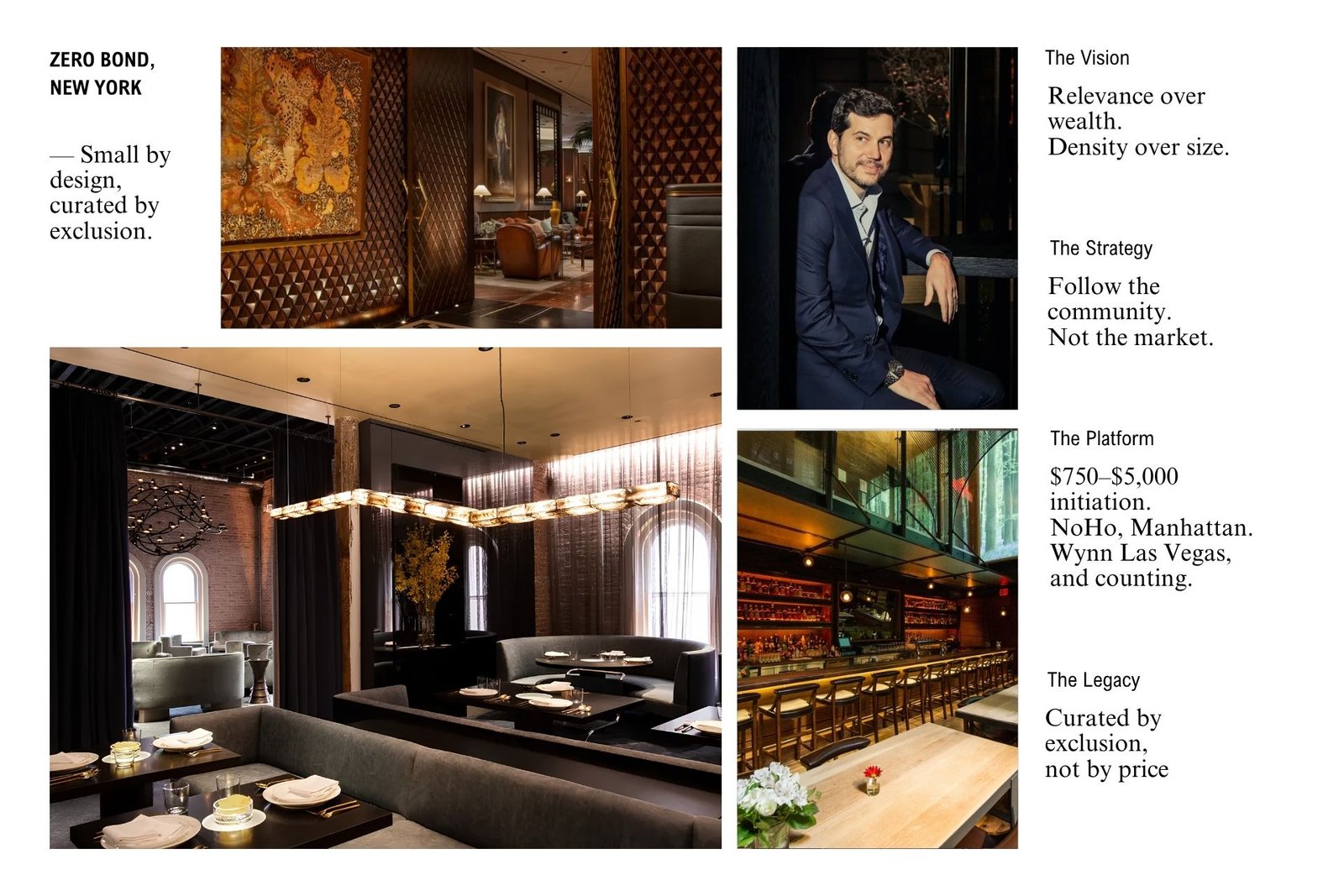
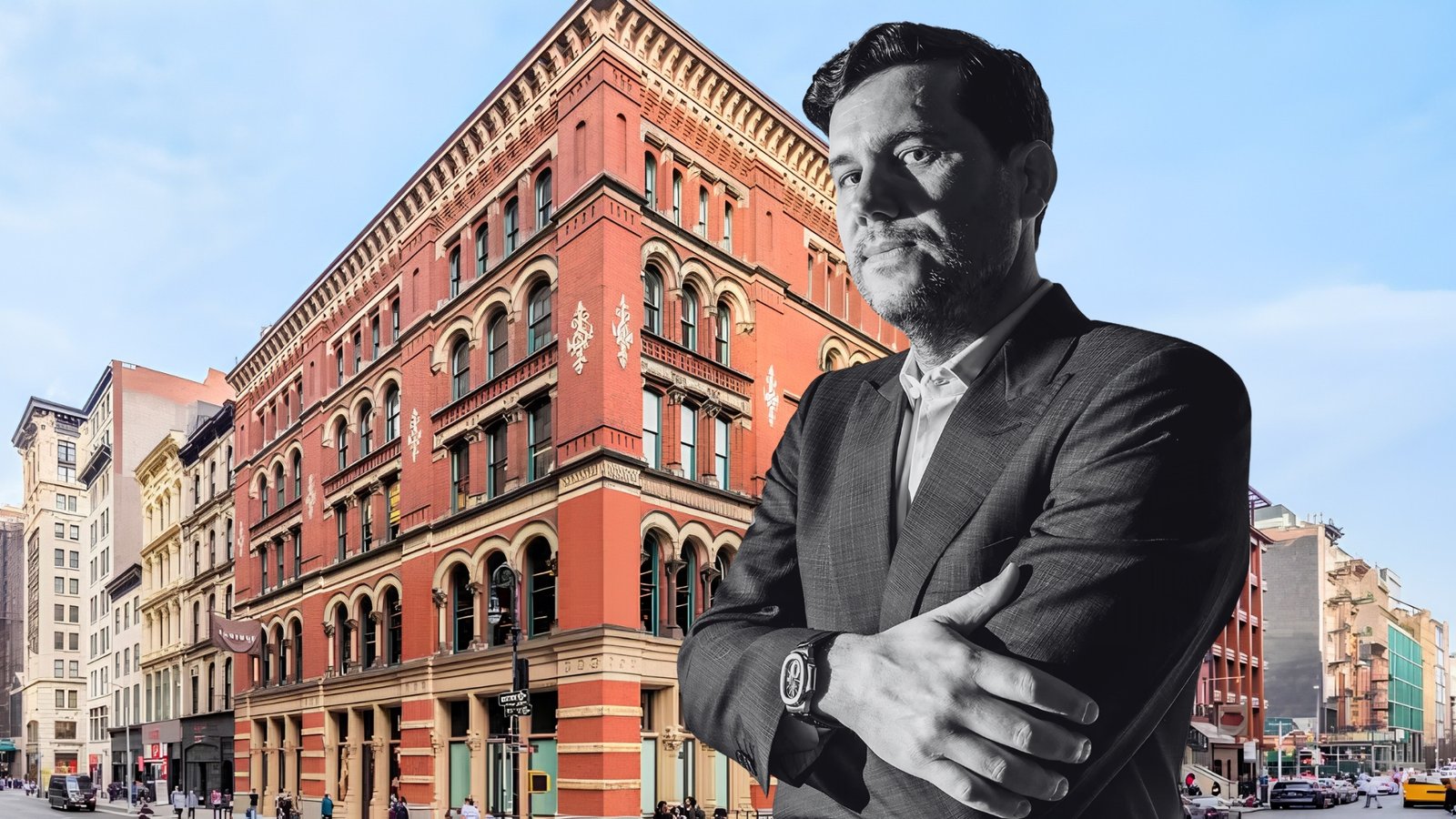
Zero Bond, NoHo, New York — small by design, curated by exclusion.
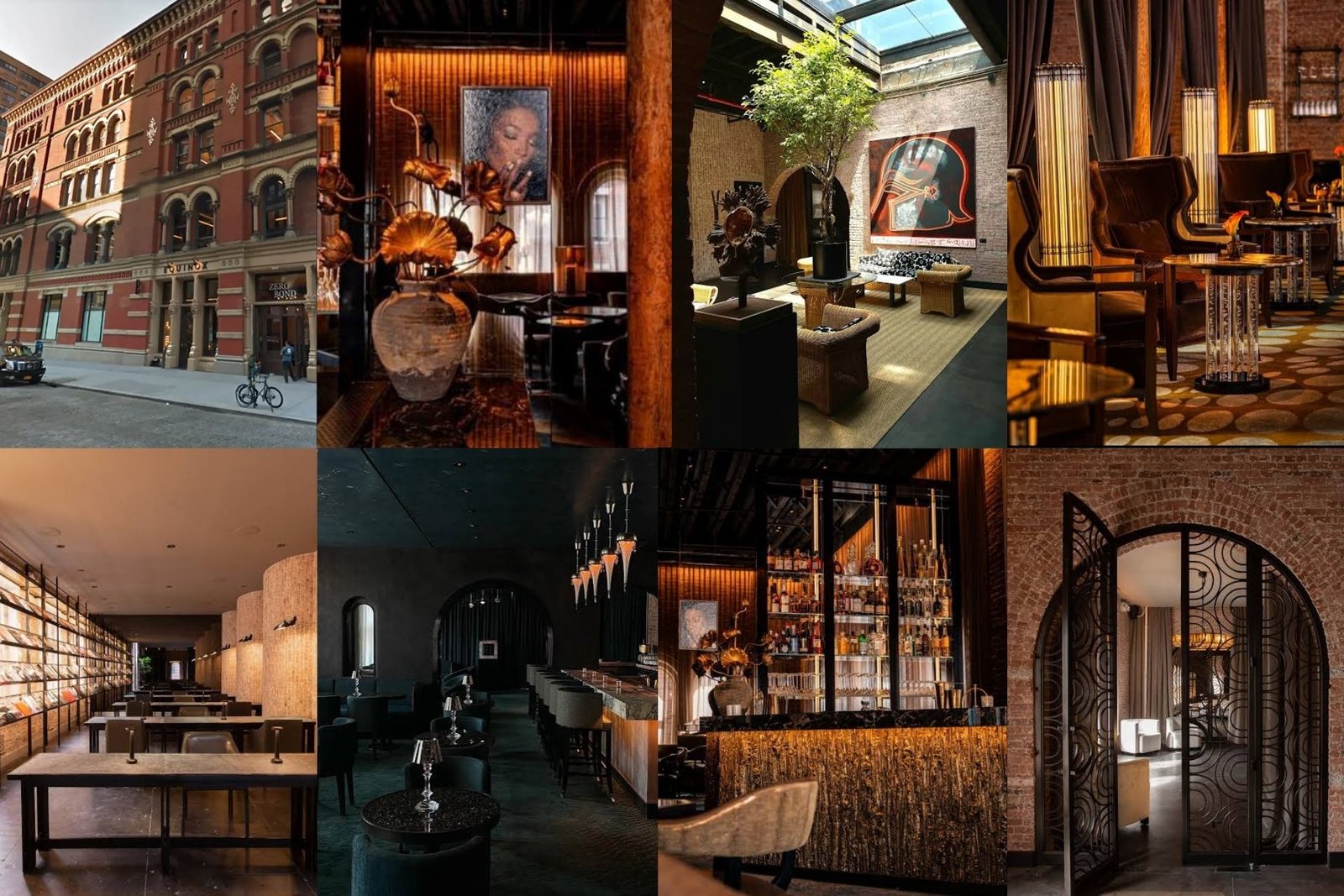
The opening of Zero Bond at Wynn Las Vegas, together with reported interest in additional markets, suggests a disciplined expansion strategy that follows existing communities rather than pursuing scale for its own sake. Unlike previous generations of members clubs, Zero Bond demonstrates that future growth will be driven by network density rather than membership volume. Its greatest value lies not in the hospitality experience it offers today, but in its ability to identify where the next generation of capital is already gathering.
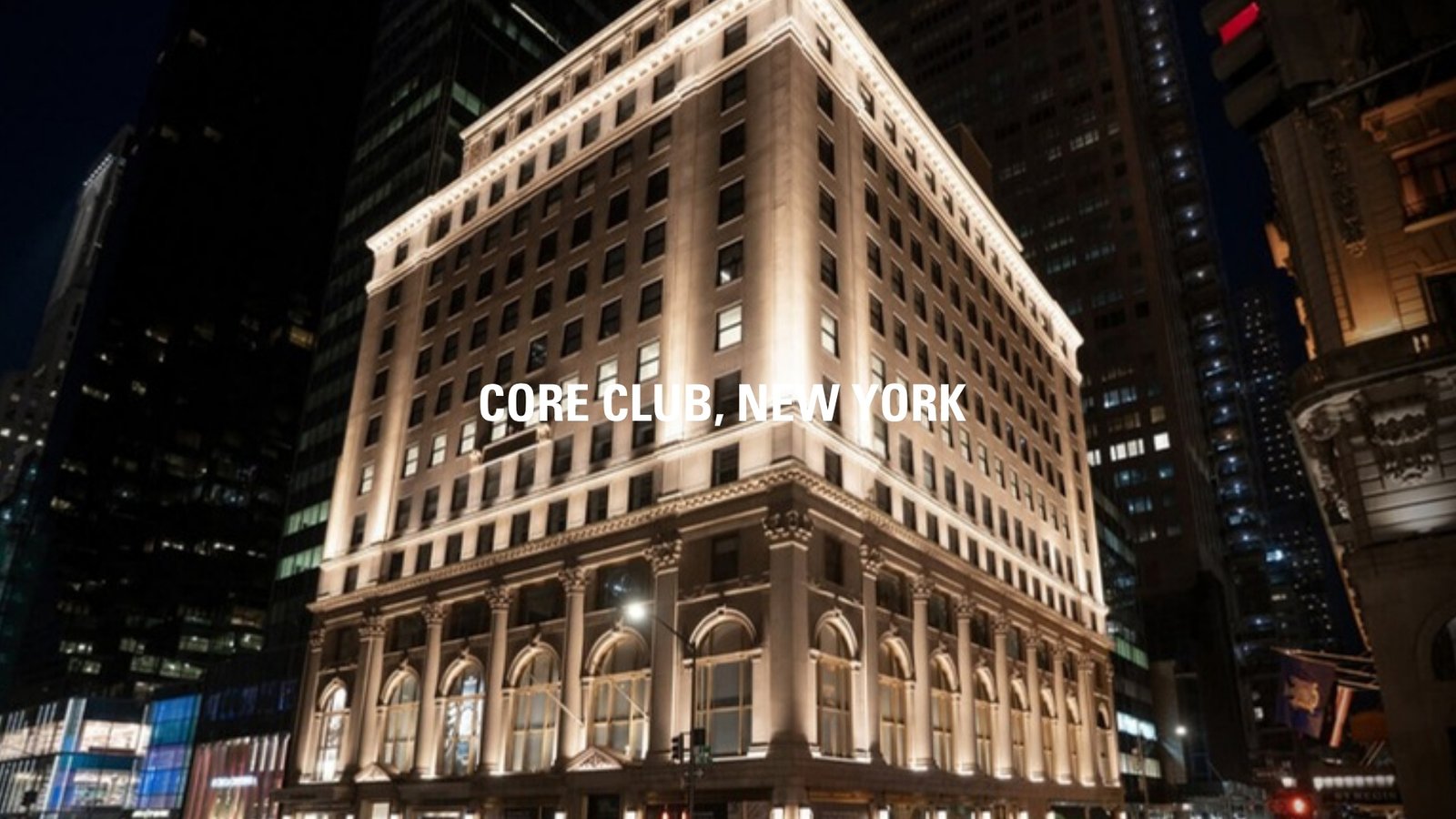
Core Club · New York
Founded 2005 · 711 Fifth Avenue · Initiation fees reported between $15,000 and $100,000 depending on membership tier. Annual dues approximately $15,000–$18,000.
Finance built Core Club. That is unusual in a category where most clubs are built around culture, creativity or social aspiration — and it is the source of the club’s strategic significance. While Aman concentrates global wealth and Zero Bond attracts founders and operators, Core Club has established itself as one of New York’s strongest concentrations of finance, private equity, family office and corporate leadership.
That focus has defined the club since its earliest years, with membership built through nomination and significant financial commitment before expanding into its flagship Fifth Avenue location in 2023. The building itself has been designed to encourage interaction, recognising that conversations, introductions and transactions are the club’s most valuable assets. Its influence therefore extends beyond hospitality into the investment ecosystem surrounding Manhattan’s luxury real estate market.
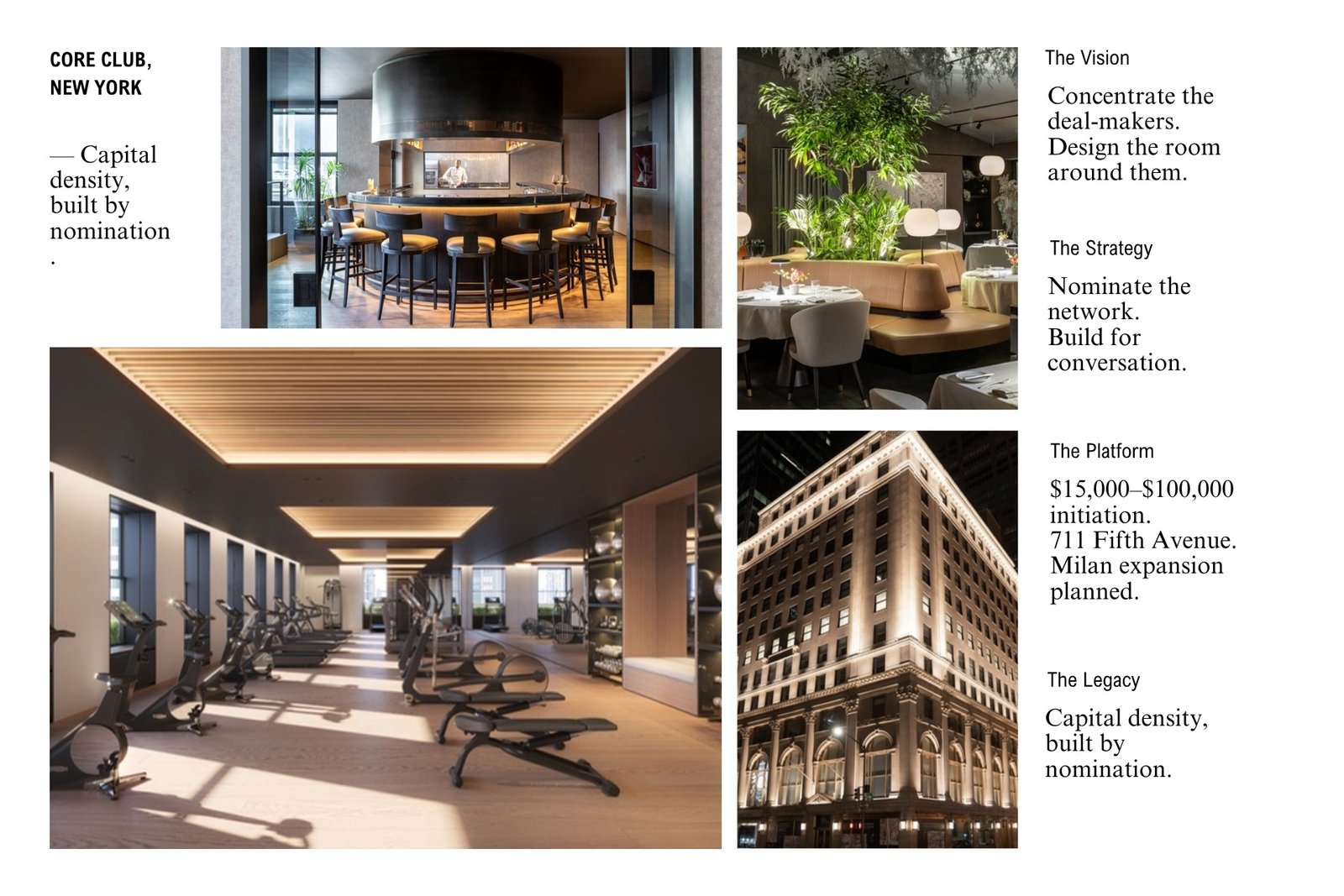
Core Club, Fifth Avenue, New York — capital density, built by nomination.
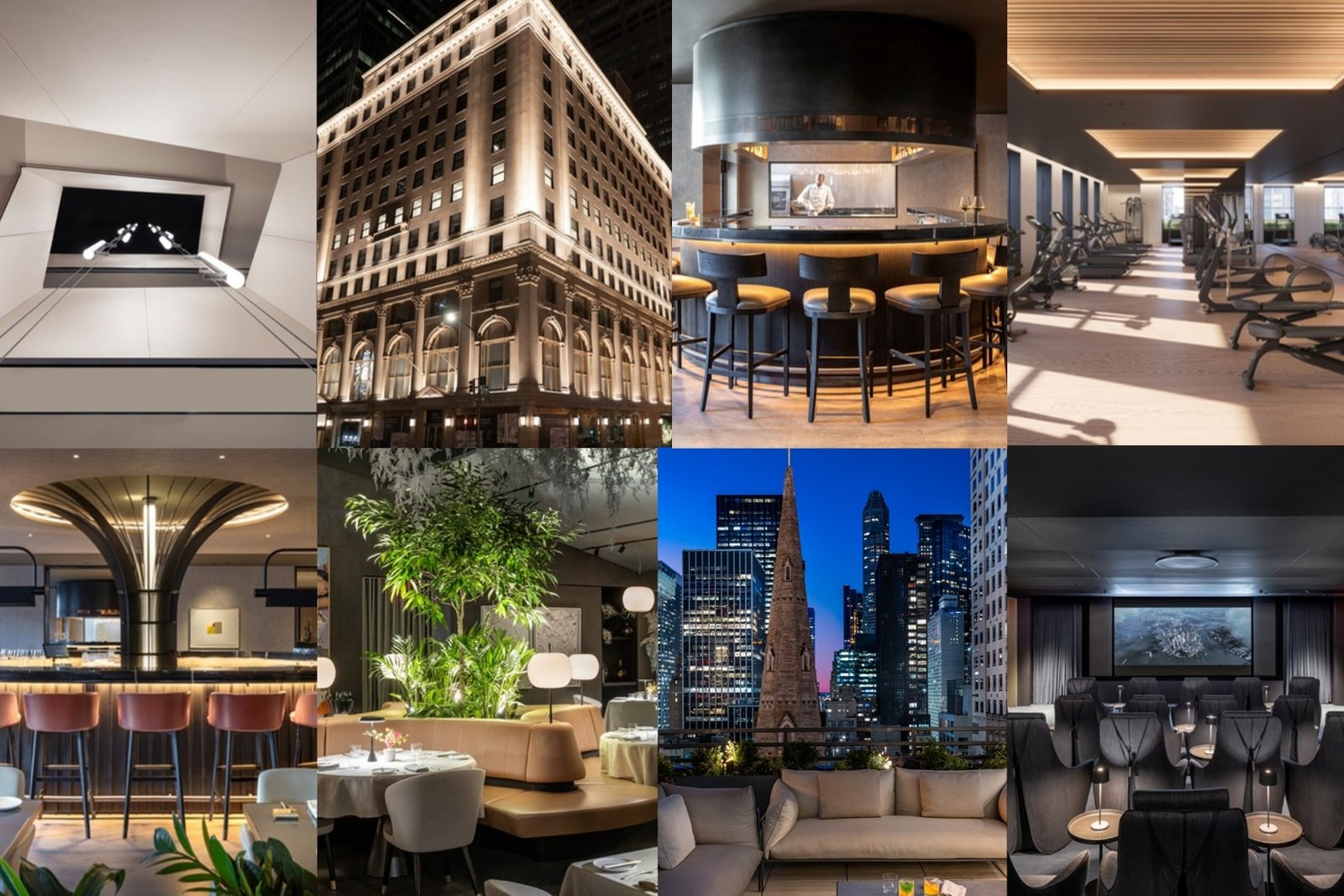
Planned international expansion into Milan suggests that Core Club is following established capital corridors rather than pursuing rapid global growth — reinforcing the idea that members clubs have become indicators of investment movement as much as destinations in their own right. Read through the framework of this Index, Core Club is valuable not because it is exclusive, but because it concentrates the people who actively deploy capital.
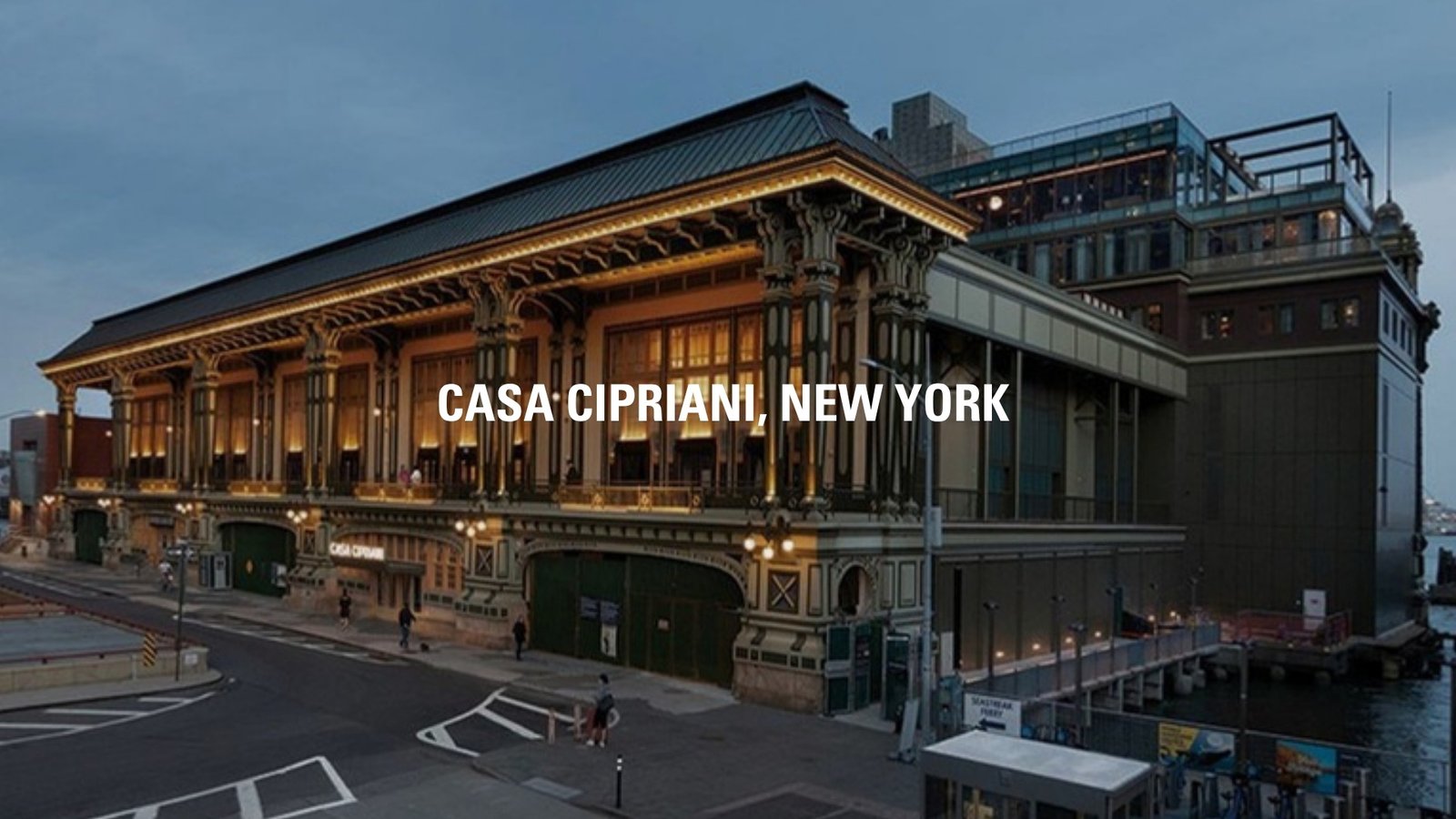
Casa Cipriani · New York
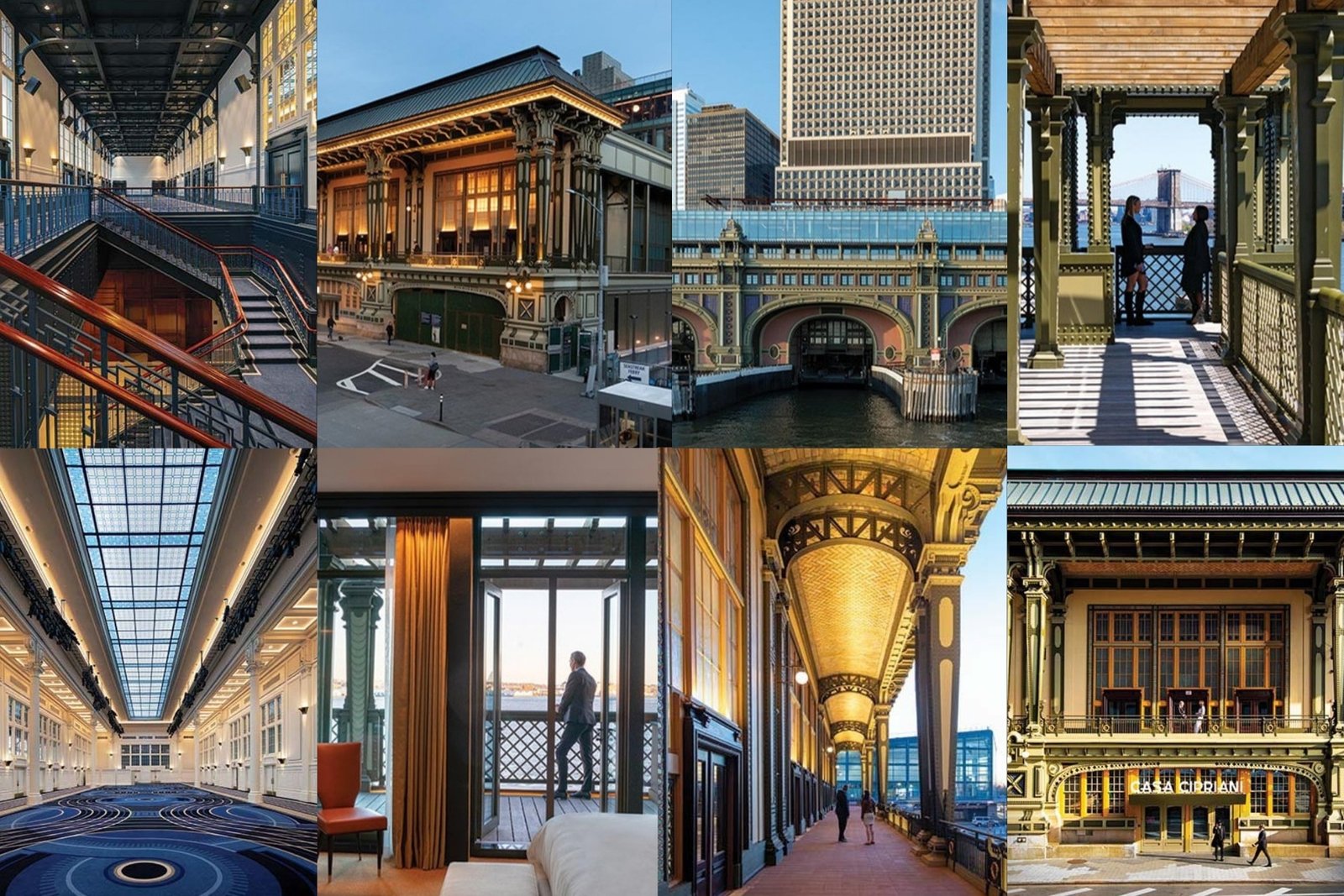
Opened 2021 · Battery Maritime Building, Manhattan · Global membership: $2,000 initiation fee · $5,000 annual dues.
The Cipriani name has been in the room before most of its members were born. That is the asset. Unlike Aman or Core Club, Casa Cipriani’s influence is rooted less in financial exclusivity than in the cultural authority of a brand that has spent decades cultivating relationships across European business, hospitality and family wealth. That heritage attracts a distinctly international membership whose value lies in long-standing networks rather than a single industry concentration.
Its location within the restored Battery Maritime Building strengthens that positioning — occupying one of Lower Manhattan’s most recognisable waterfront landmarks while contributing to the continued premium of an irreplaceable address. Its unified membership across New York and Milan further distinguishes the model, reflecting how many ultra-high-net-worth members increasingly operate between multiple global cities rather than a single primary residence.
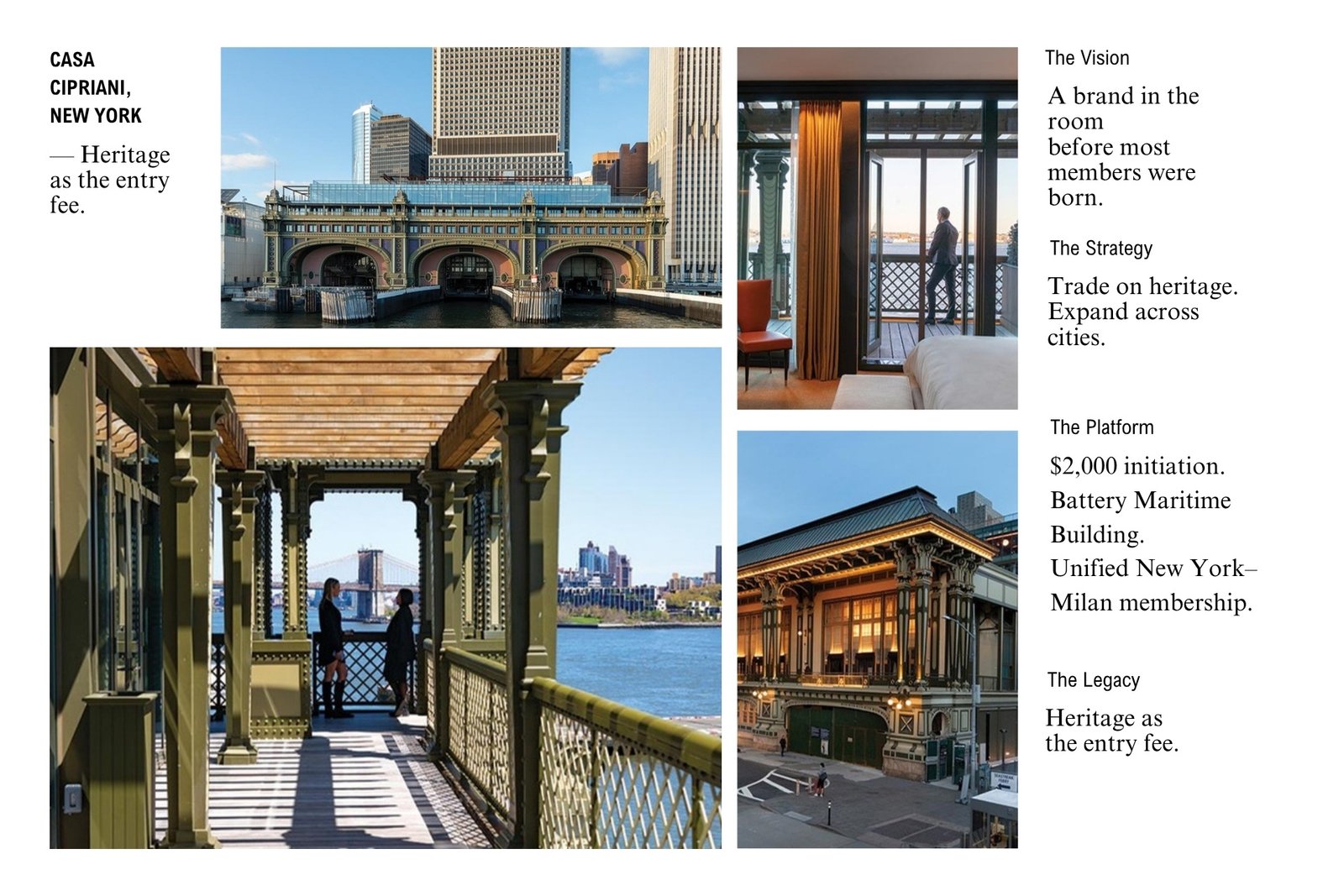
Casa Cipriani, Battery Maritime Building, New York — heritage as the entry fee.
The result is a network that extends beyond one location, creating continuity across markets. Casa Cipriani therefore demonstrates how cultural legacy, carefully chosen real estate and international mobility combine to create durable value in the evolving members club landscape.
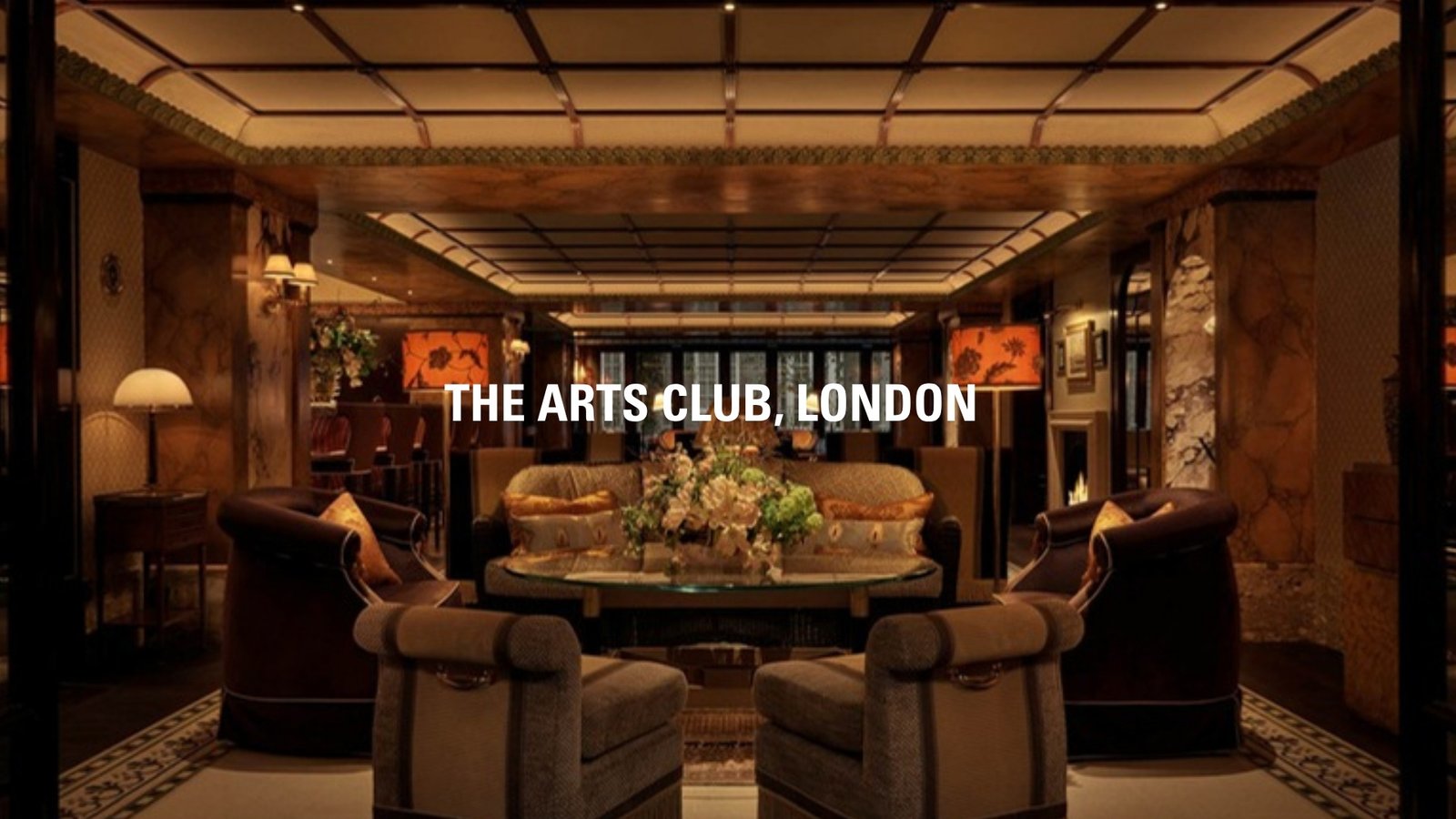
The Arts Club · London
Founded 1863 · 40 Dover Street, Mayfair · Full membership approximately £3,200 annually plus a one-time assessment fee · Dubai access available as an additional membership option
The Arts Club remains one of the strongest indicators of how global capital moves through London. Founded more than 160 years ago, it occupies a position within Mayfair that has evolved alongside one of the world’s most valuable luxury real estate markets — making it as much a part of the neighbourhood’s identity as its hotels, galleries and private residences.
While its origins were rooted in the arts, today’s membership reflects a far broader concentration of entrepreneurs, investors, collectors and international business leaders whose influence extends well beyond the cultural sector. That network has become increasingly global, reflected in the club’s expansion into Dubai — which follows the growing movement of wealth between London, the Gulf and Asia rather than attempting to create a new market from scratch.
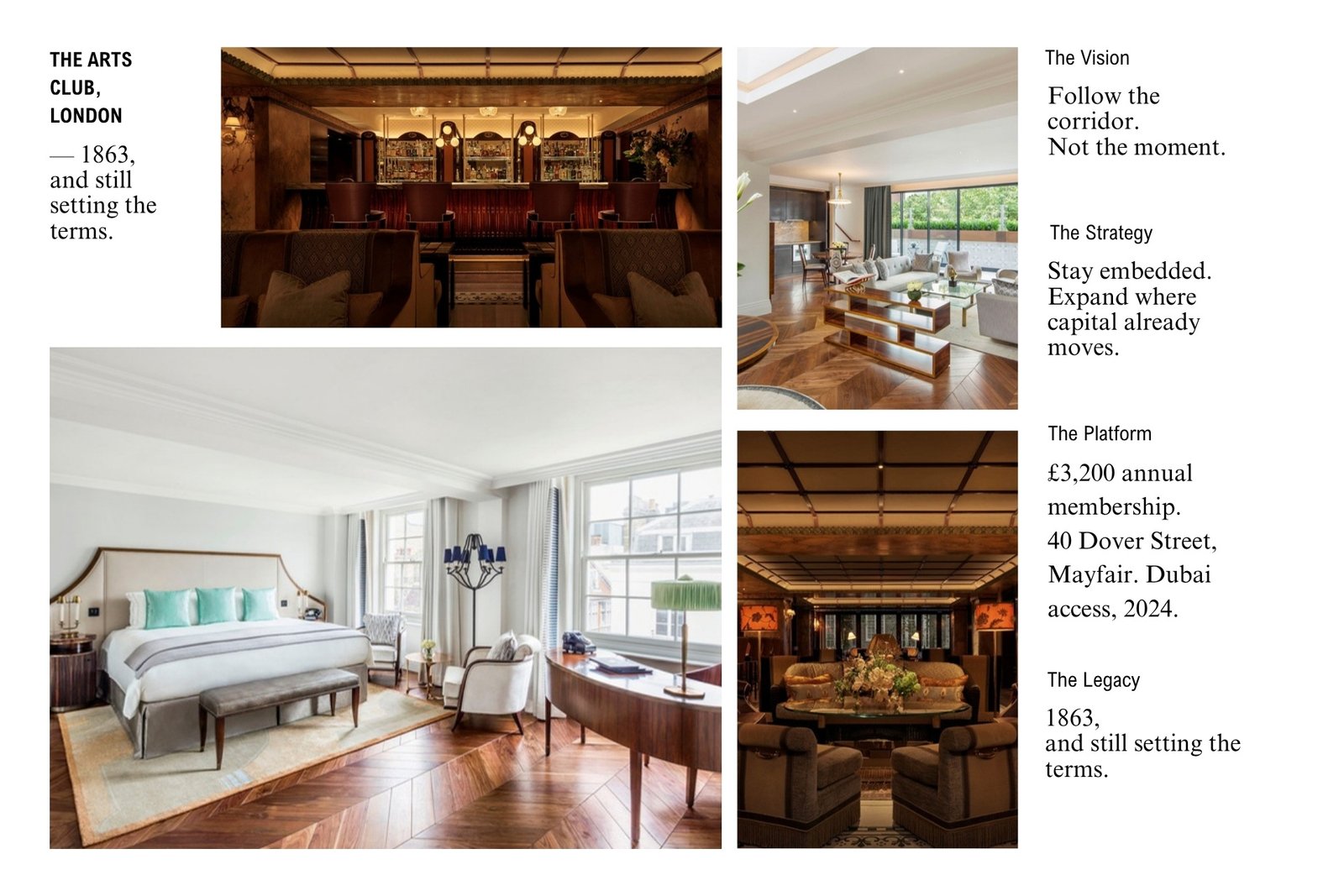
The Arts Club, Dover Street, Mayfair — 1863, and still setting the terms.
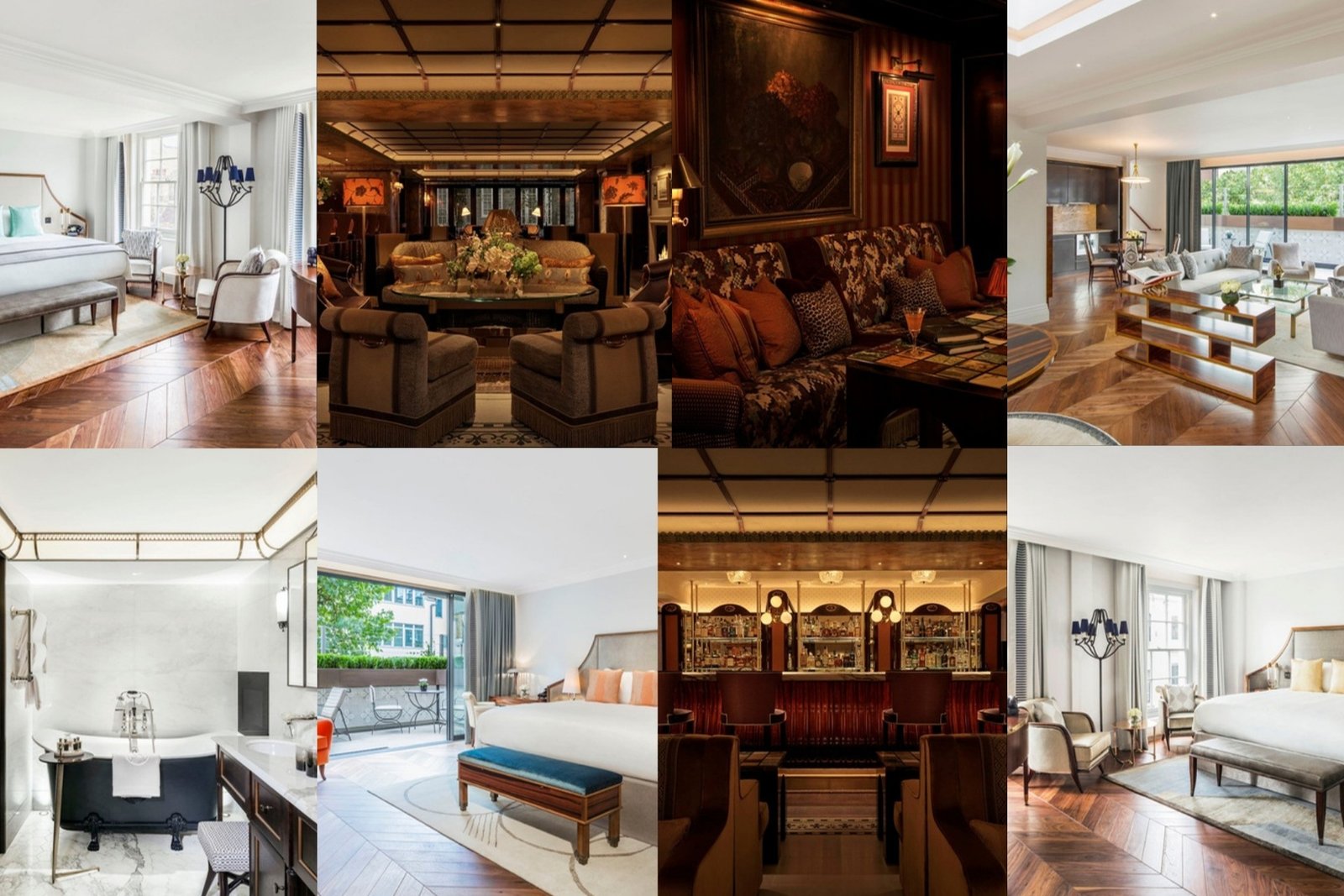
The decision is significant because it follows existing capital corridors instead of speculative growth opportunities. The Arts Club therefore demonstrates how the most influential members clubs evolve with their membership, using expansion not to maximise scale but to remain embedded within the locations where global capital is already concentrating.
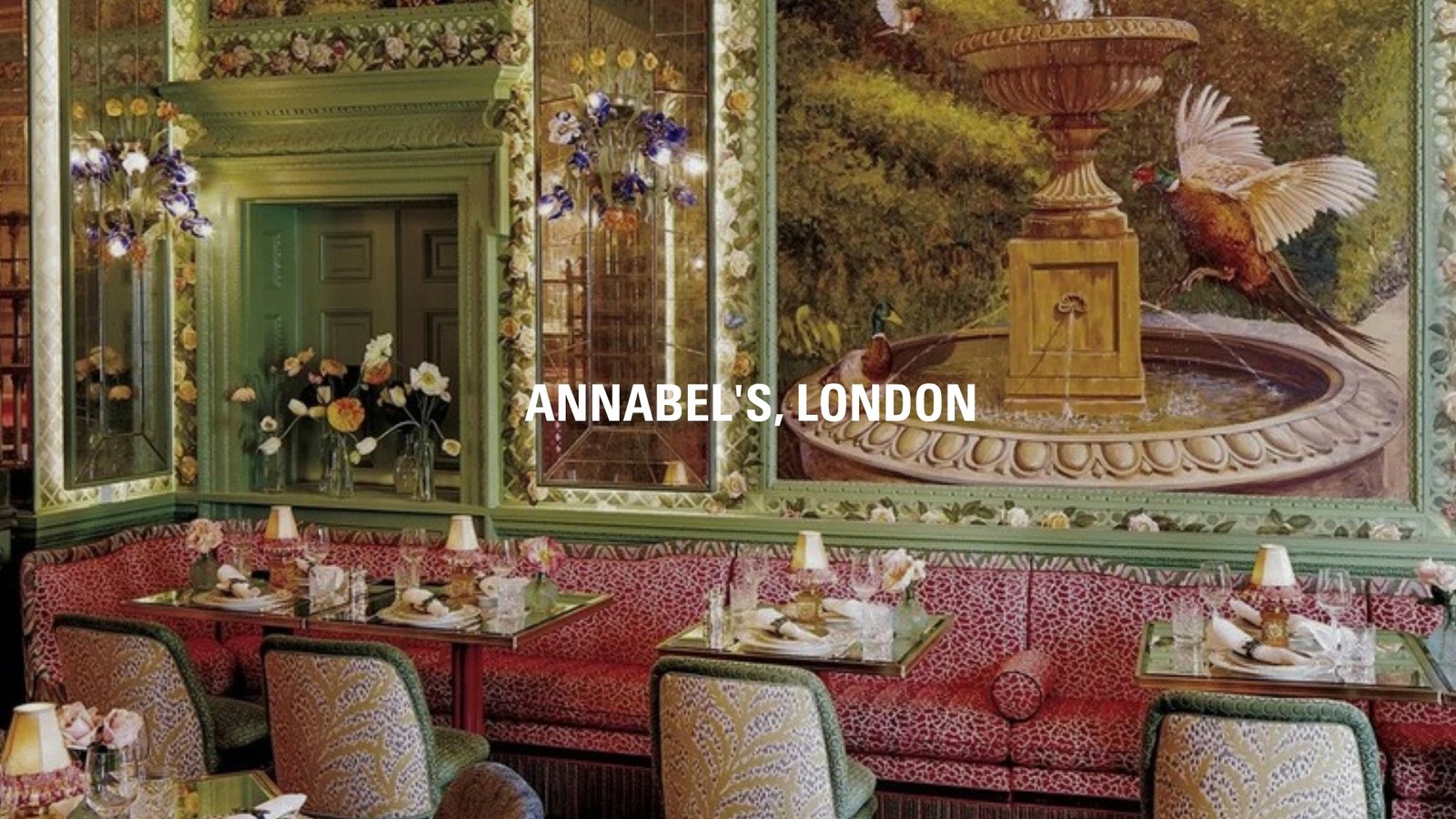
Annabel’s · London
Founded 1963 · Berkeley Square, Mayfair · Membership by application
Annabel’s became more than a members club the moment Gulf-backed capital paid £1.4 billion to acquire the hospitality portfolio anchored by its name. The acquisition of Richard Caring’s Birley Clubs by Abu Dhabi-based DIAFA transformed one of London’s most recognisable private institutions into a strategic hospitality asset — validating the category as an investable platform rather than simply a collection of exclusive venues.
Its membership has long brought together international business leaders, entrepreneurs, cultural figures and established family wealth within Mayfair, contributing to one of the highest concentrations of luxury real estate anywhere in the world. More significant still is the confirmation of Annabel’s planned expansion into New York — signalling that the value of the brand now extends beyond London.
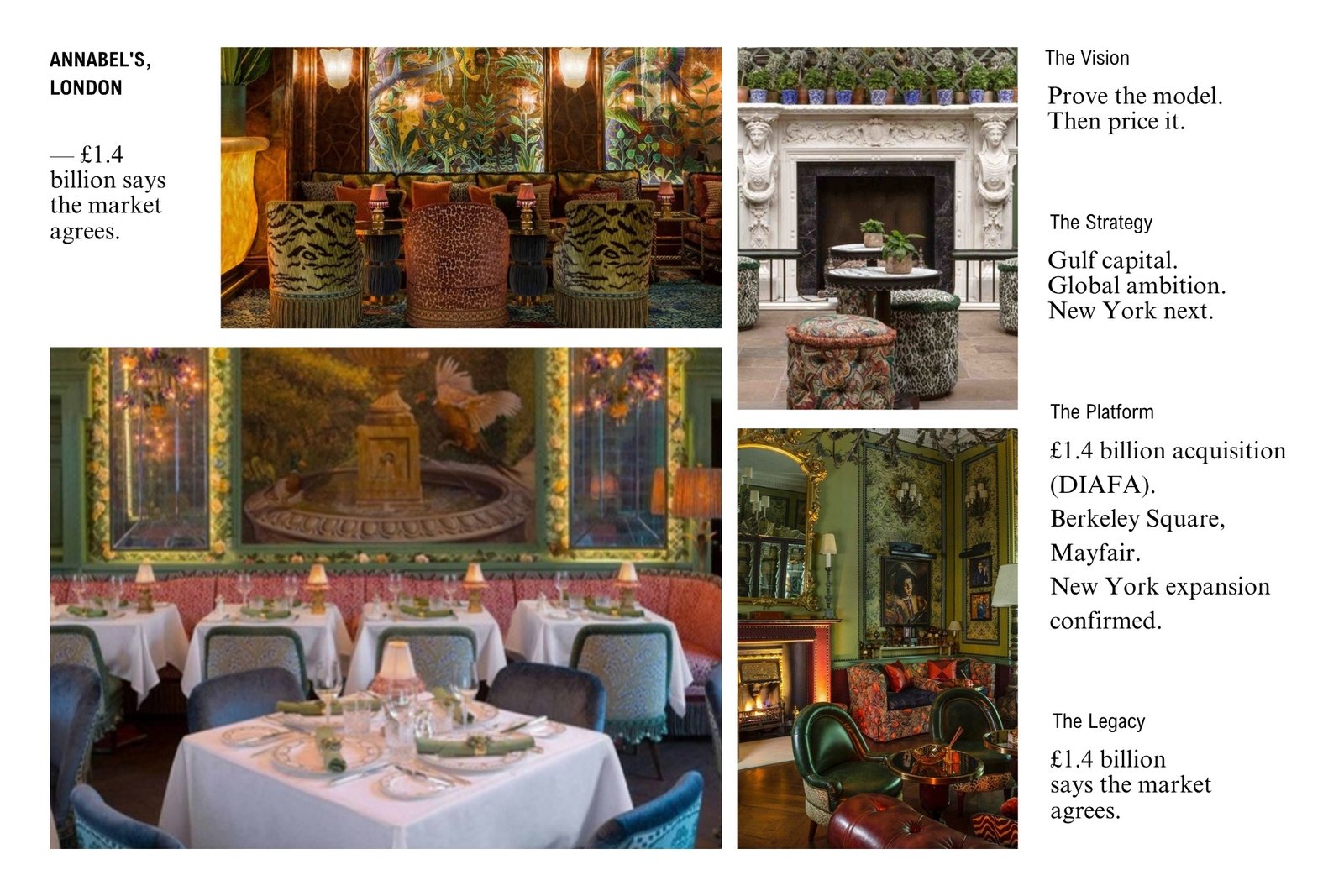
Annabel’s, Berkeley Square, Mayfair — £1.4 billion says the market agrees.
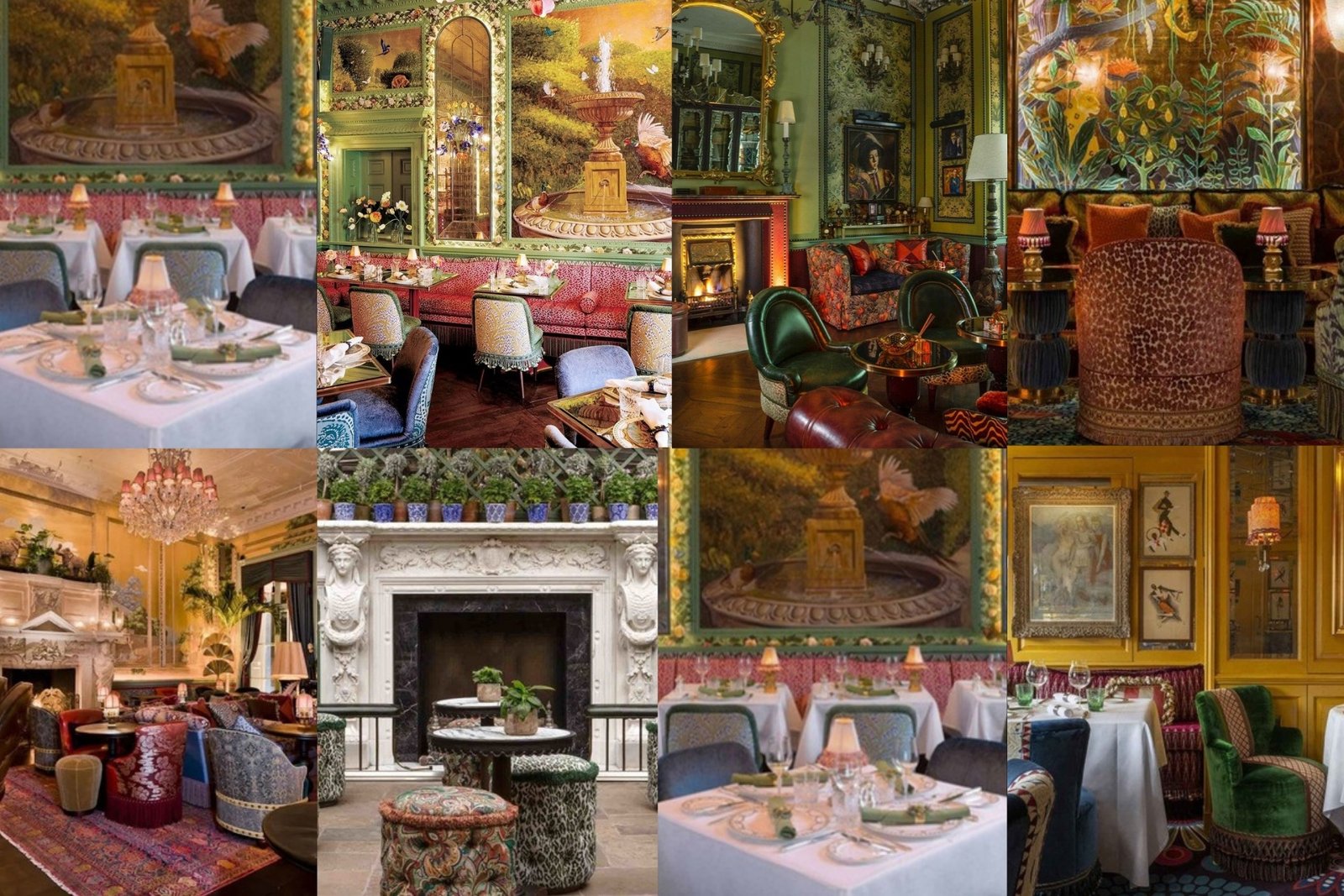
Like Aman before it, Annabel’s is using carefully selected locations to follow concentrations of ultra-high-net-worth capital rather than pursuing rapid international growth. The acquisition therefore represents more than a corporate transaction. It marks the recognition of the members club itself as a long-term capital asset.
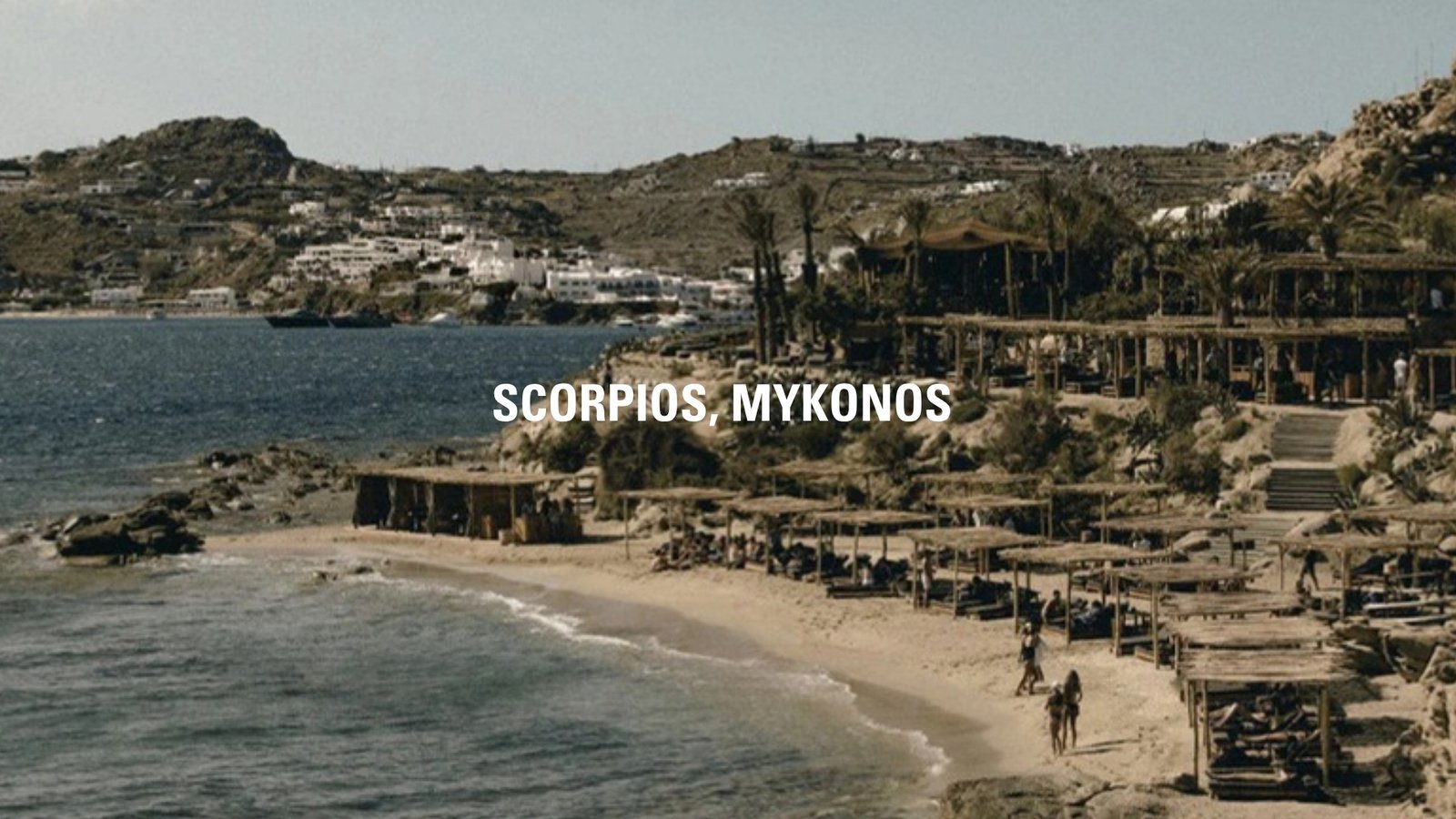
Scorpios · Mykonos and Bodrum
Founded 2015 · Paraga Beach, Mykonos · Bodrum location opened 2024
Scorpios has no formal membership. No application process. No initiation fee. It is also one of the most studied community models in contemporary luxury hospitality — which suggests that the mechanisms of a private members club matter far less than the outcome they are designed to produce.
Without relying on formal exclusivity, Scorpios has built one of the strongest communities in luxury hospitality through carefully curated experiences — attracting entrepreneurs, investors, creatives and global tastemakers who return season after season. That consistency creates a network with many of the same characteristics as a traditional private club, despite the absence of membership. Its influence extends beyond hospitality into the surrounding destinations themselves. Both Mykonos and Bodrum have experienced sustained demand from affluent international travellers, and Scorpios has become part of the cultural infrastructure supporting those markets rather than simply another hospitality venue within them.
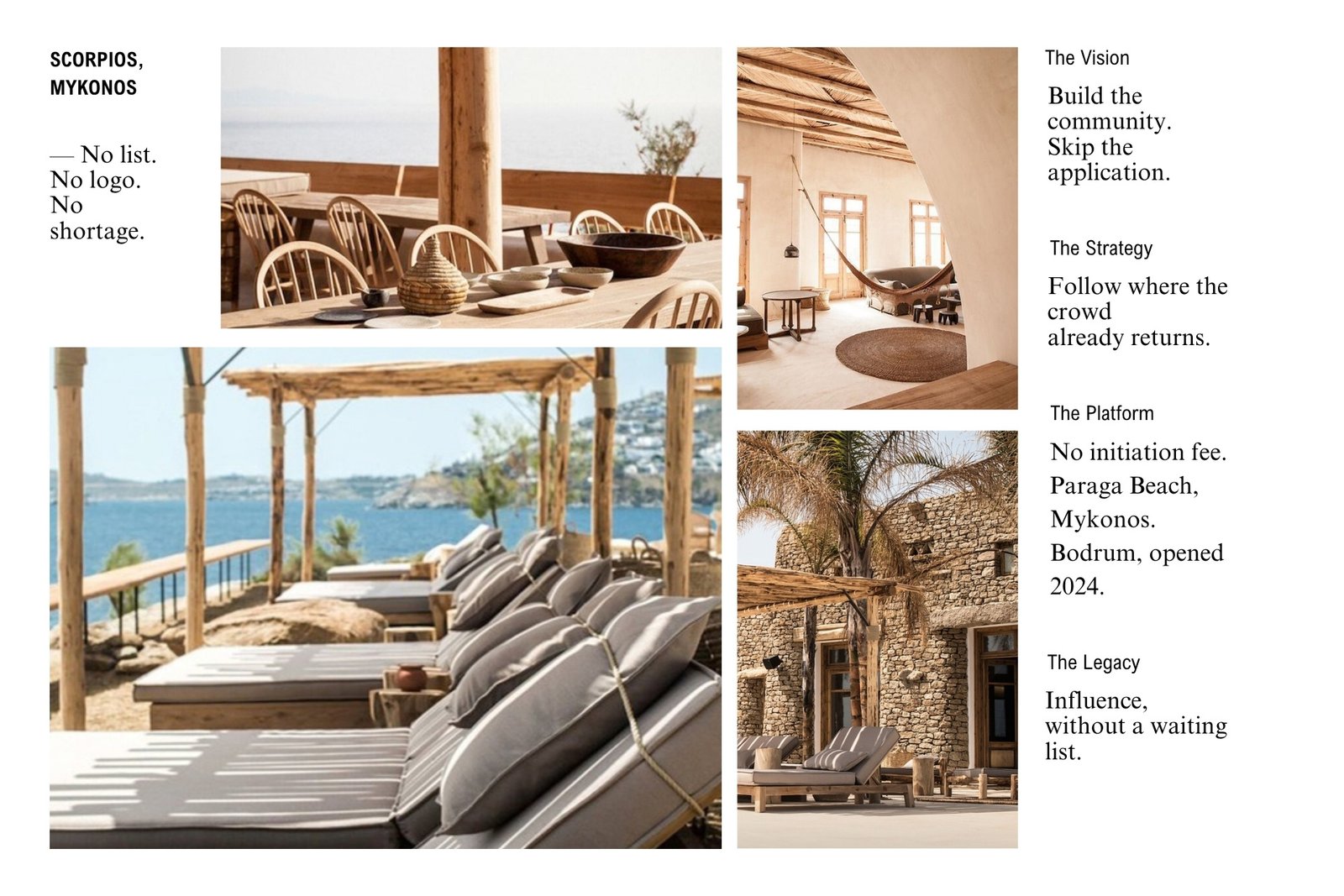
Scorpios, Paraga Beach, Mykonos — no list. No logo. No shortage.
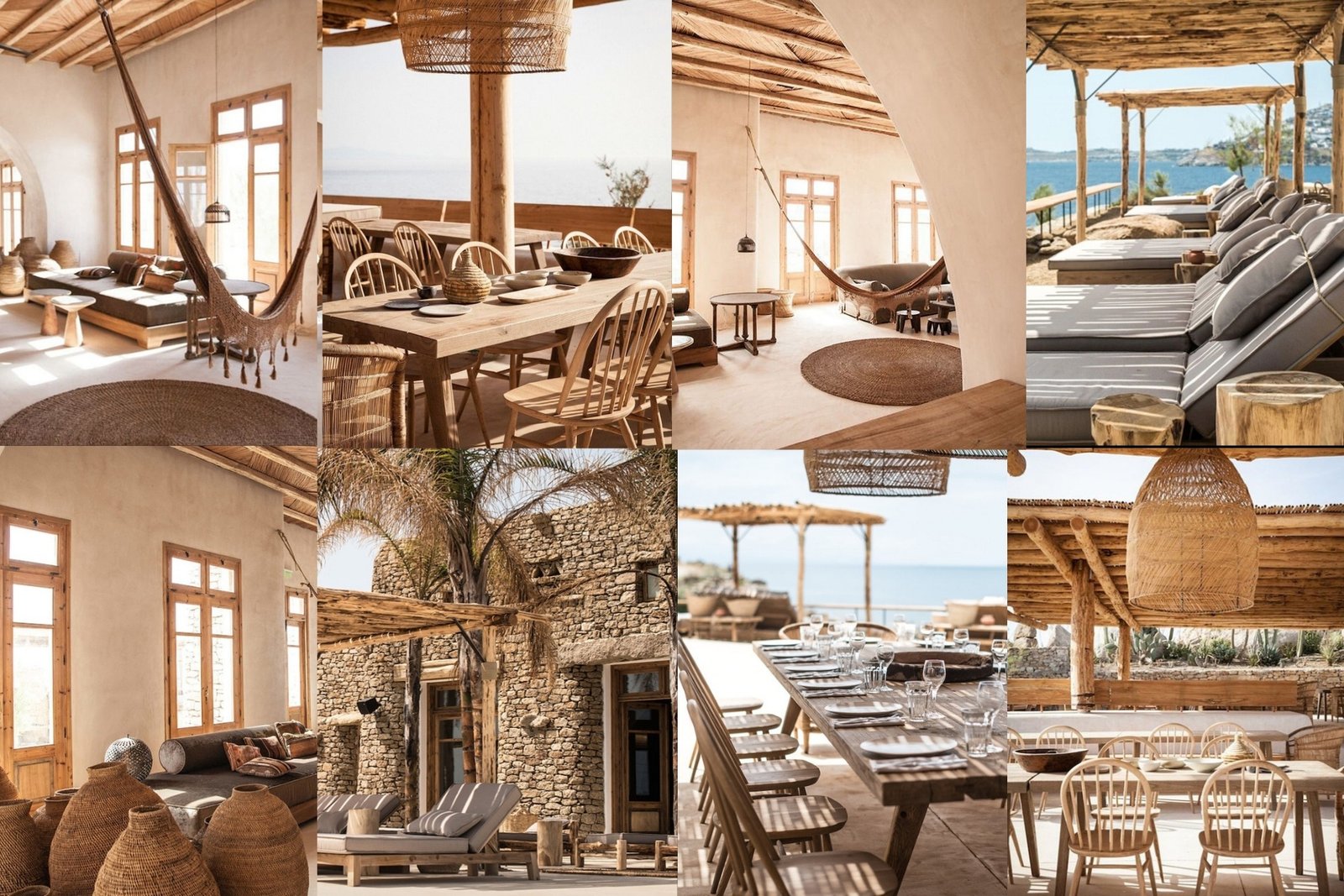
The decision to expand from Mykonos to Bodrum reflects a disciplined understanding of where its community already travels — prioritising cultural alignment over market size. In doing so, Scorpios demonstrates that the future of the category may not always depend on membership cards or waiting lists. Increasingly, carefully curated environments can generate the same network effects — and the same influence over luxury real estate and destination value — as traditional private clubs.
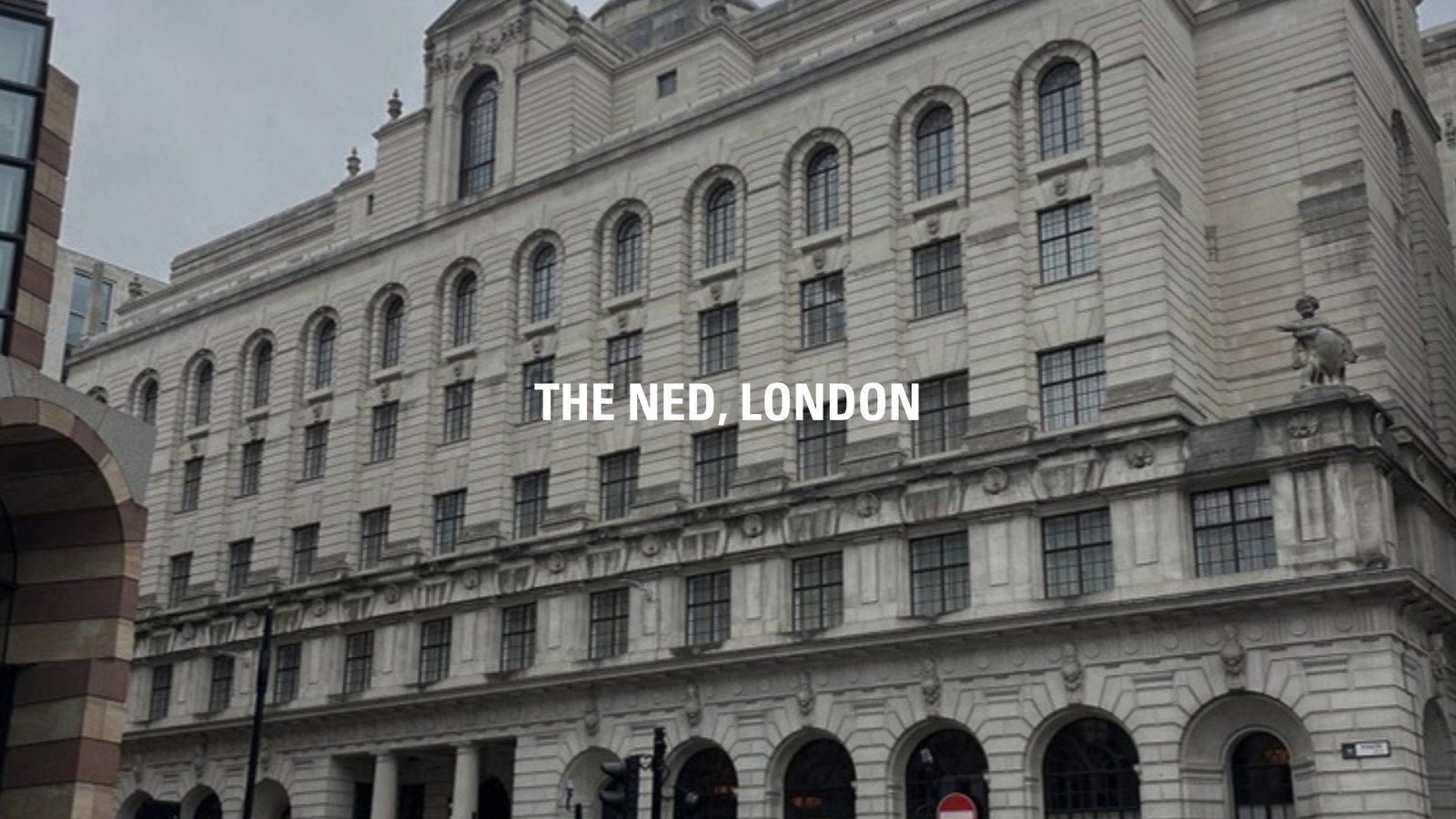
The Ned · London and Washington DC
Opened 2017 · London flagship in the former Midland Bank headquarters · Washington DC club opened 2025 · Membership by application with multiple tiers available
The Ned occupies the former Midland Bank headquarters opposite the Bank of England. The address is not incidental — it is the thesis. Sitting within one of the world’s most concentrated financial districts, the London location naturally attracts executives, entrepreneurs and investors whose professional networks reinforce the club’s long-term value.
Unlike smaller clubs built primarily around exclusivity, The Ned integrates hotel, dining, events and membership into a single operating model — creating an ecosystem that supports both hospitality performance and community. Its expansion into Washington DC follows the same logic. Positioned at the intersection of political, financial and cultural influence, the club reflects an understanding that network density is created wherever decision-makers converge, regardless of industry.
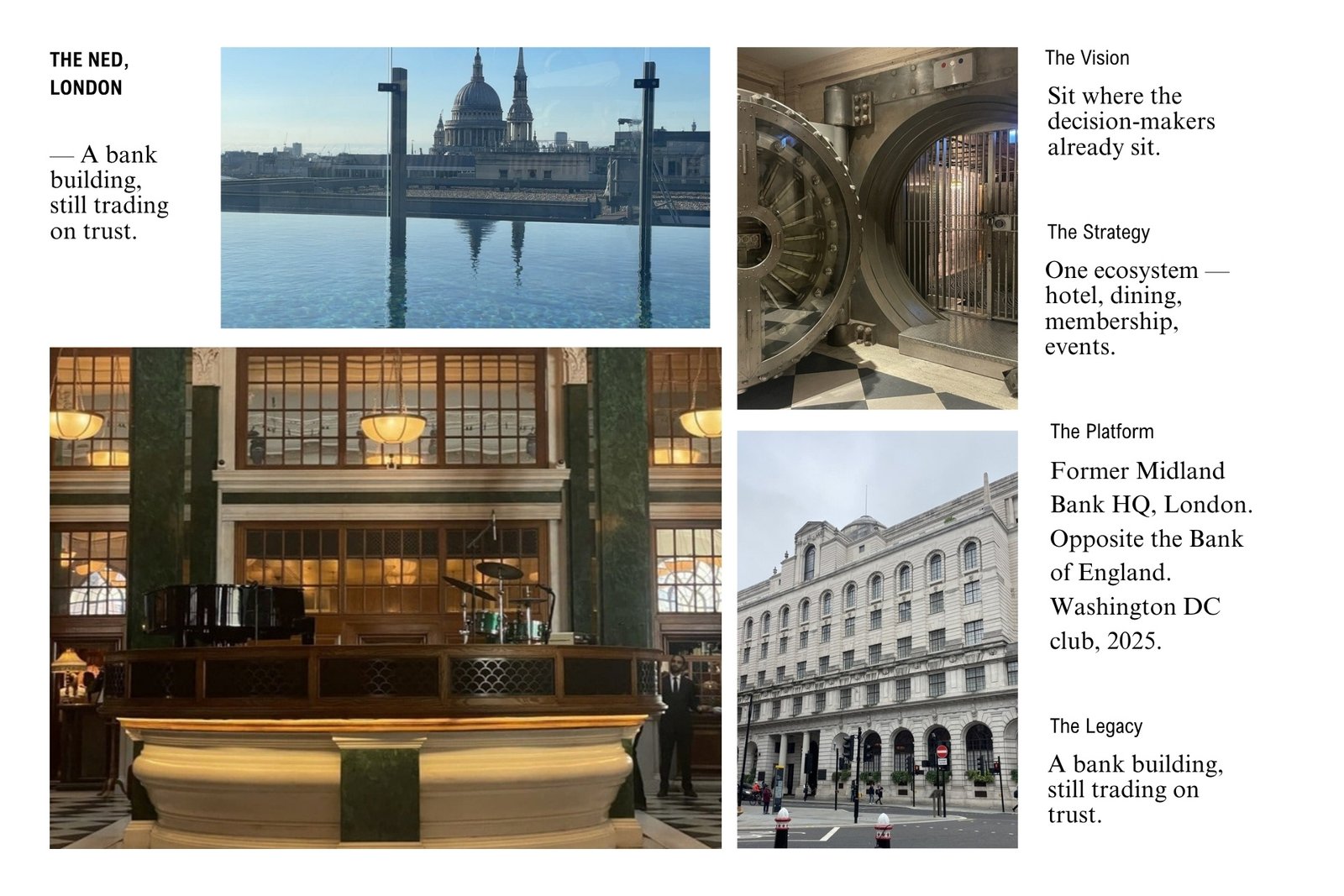
The Ned, Poultry, London — a bank building, still trading on trust.
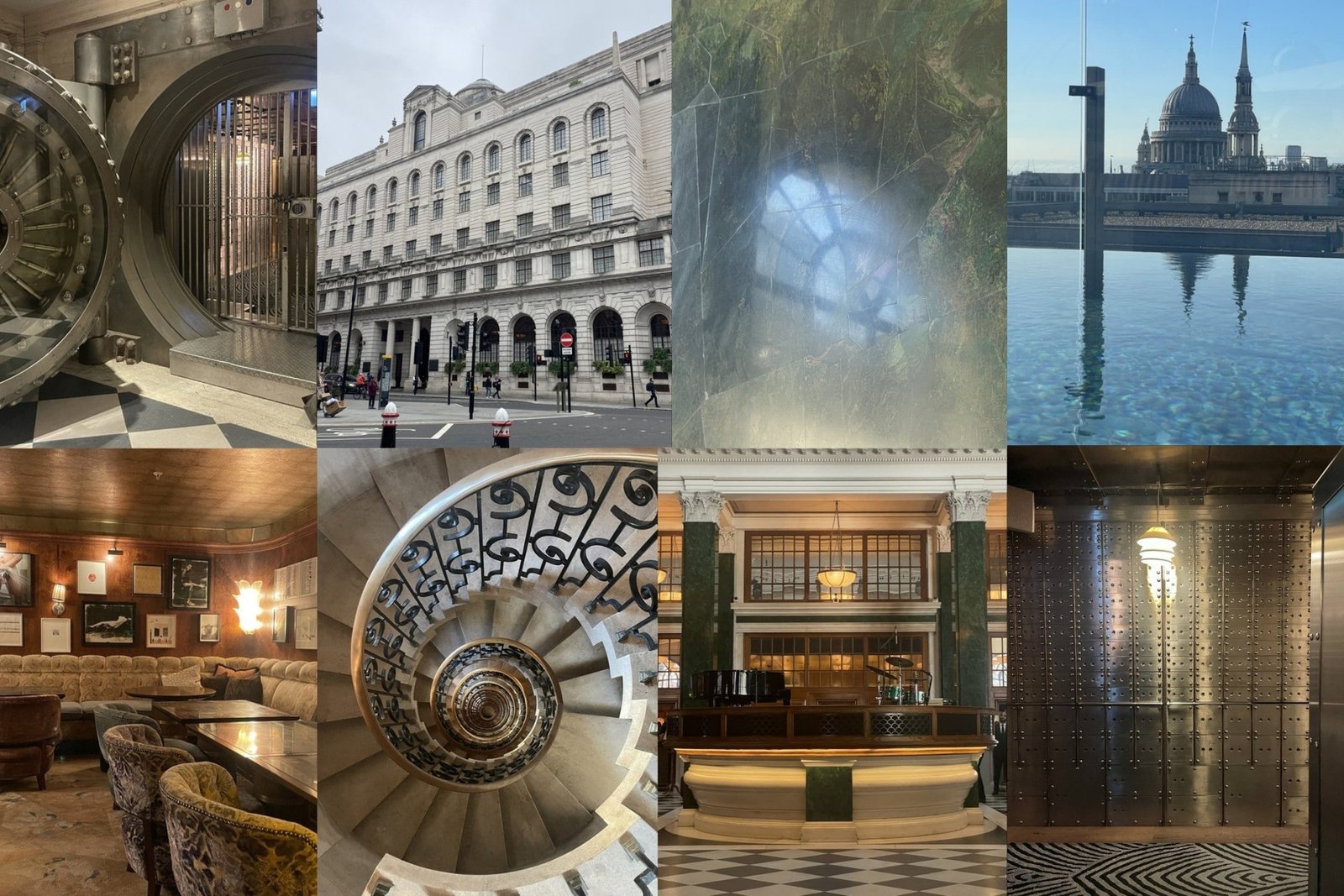
Rather than pursuing growth through volume, The Ned is selecting locations where existing concentrations of influence already exist. Its evolution illustrates how members clubs increasingly function as long-term urban infrastructure — strengthening both the hospitality asset itself and the surrounding district through the quality of the network they attract.
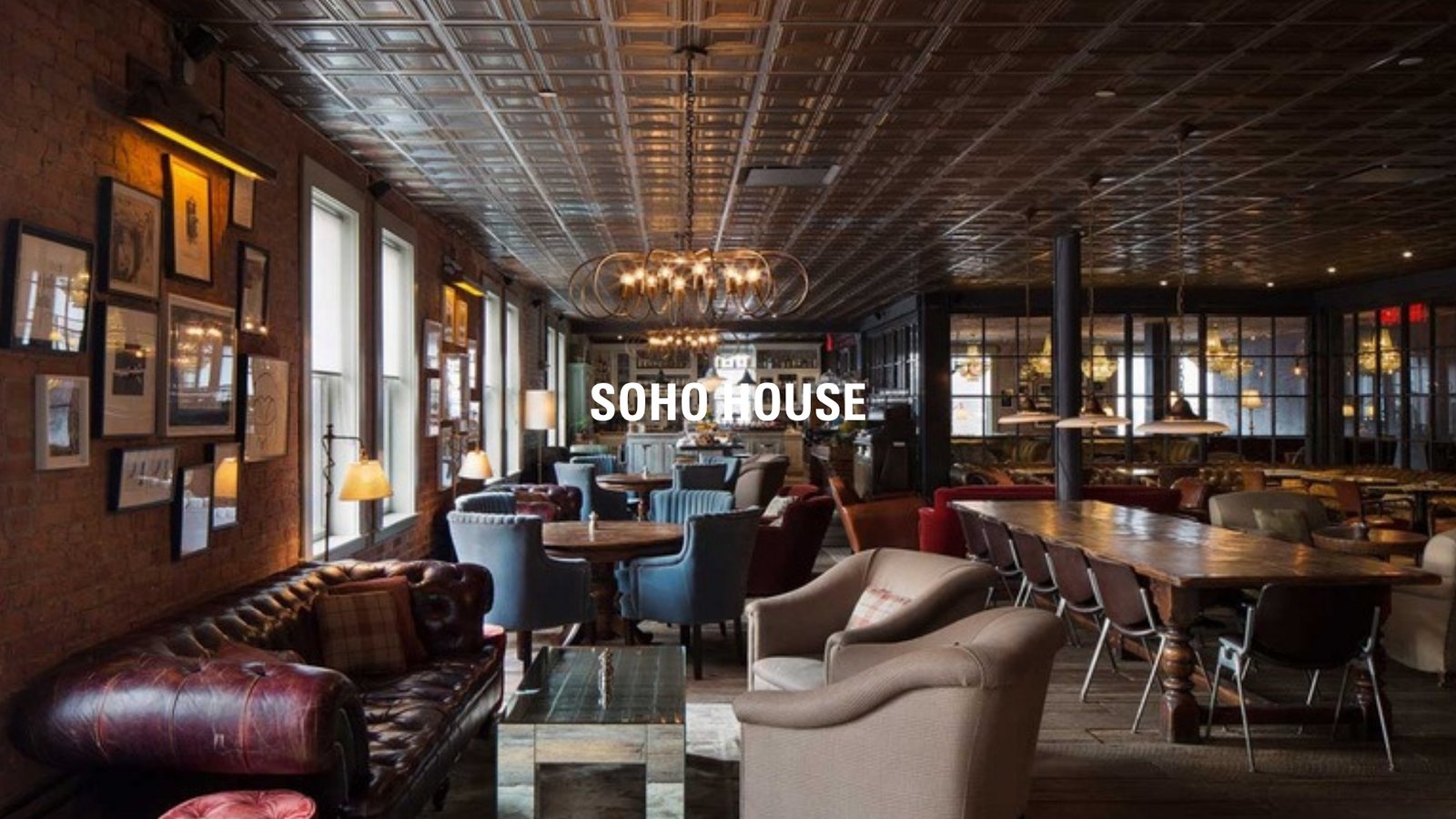
Soho House · Global
Founded 1995 · More than 40 Houses globally · Returned to private ownership in 2026
No organisation has shaped the modern members club market more than Soho House, and none better illustrates the tension between scale and curation. By transforming private membership into a globally recognised hospitality platform, Soho House demonstrated that community itself could become a commercial product.
Yet rapid expansion inevitably challenged the exclusivity that had originally made membership valuable. As the network grew, the concentration of active capital per member became less distinctive — reducing the strength of the club’s signalling power despite its continued commercial success.
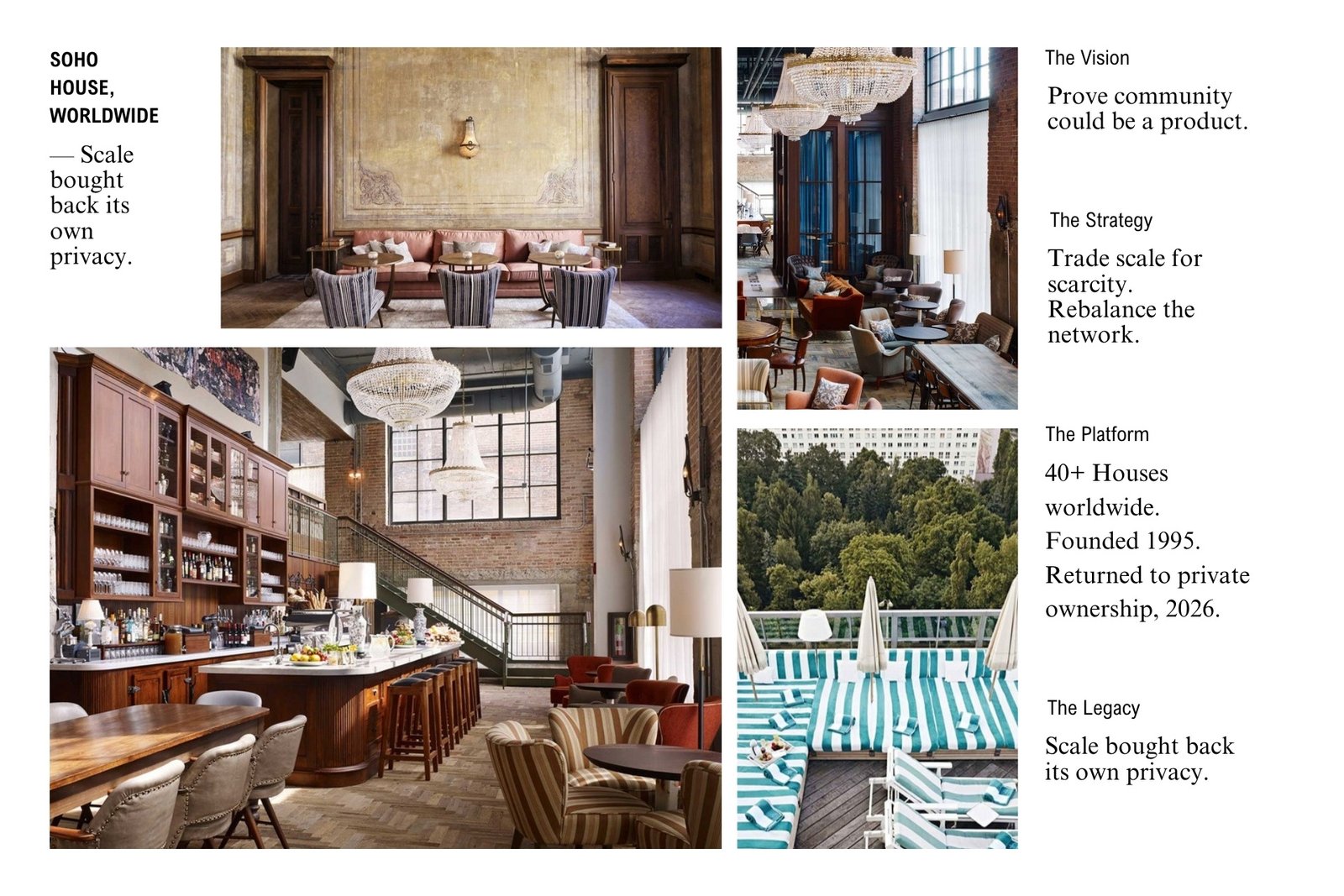
Soho House, worldwide — scale bought back its own privacy
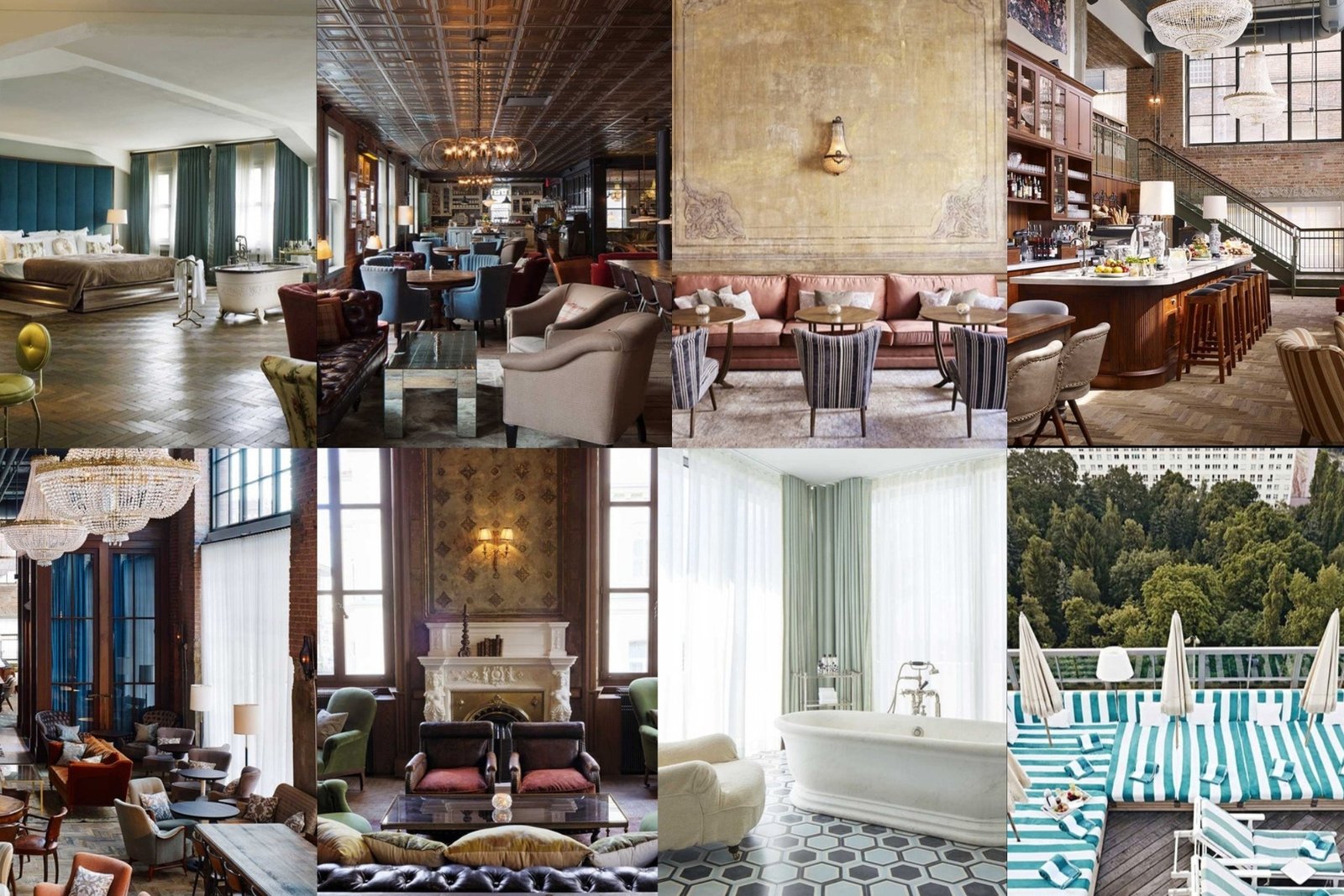
Its return to private ownership in 2026 therefore represents more than a financial transaction. Freed from the pressures of public markets, Soho House now has the opportunity to rebalance growth with curation, restoring the conditions that originally differentiated the brand. Even so, its significance within this Index lies less in where it stands today than in the lessons it provides for the wider category. Soho House proved that scale could build a global business. The next generation of members clubs is demonstrating that scarcity may ultimately prove more valuable.
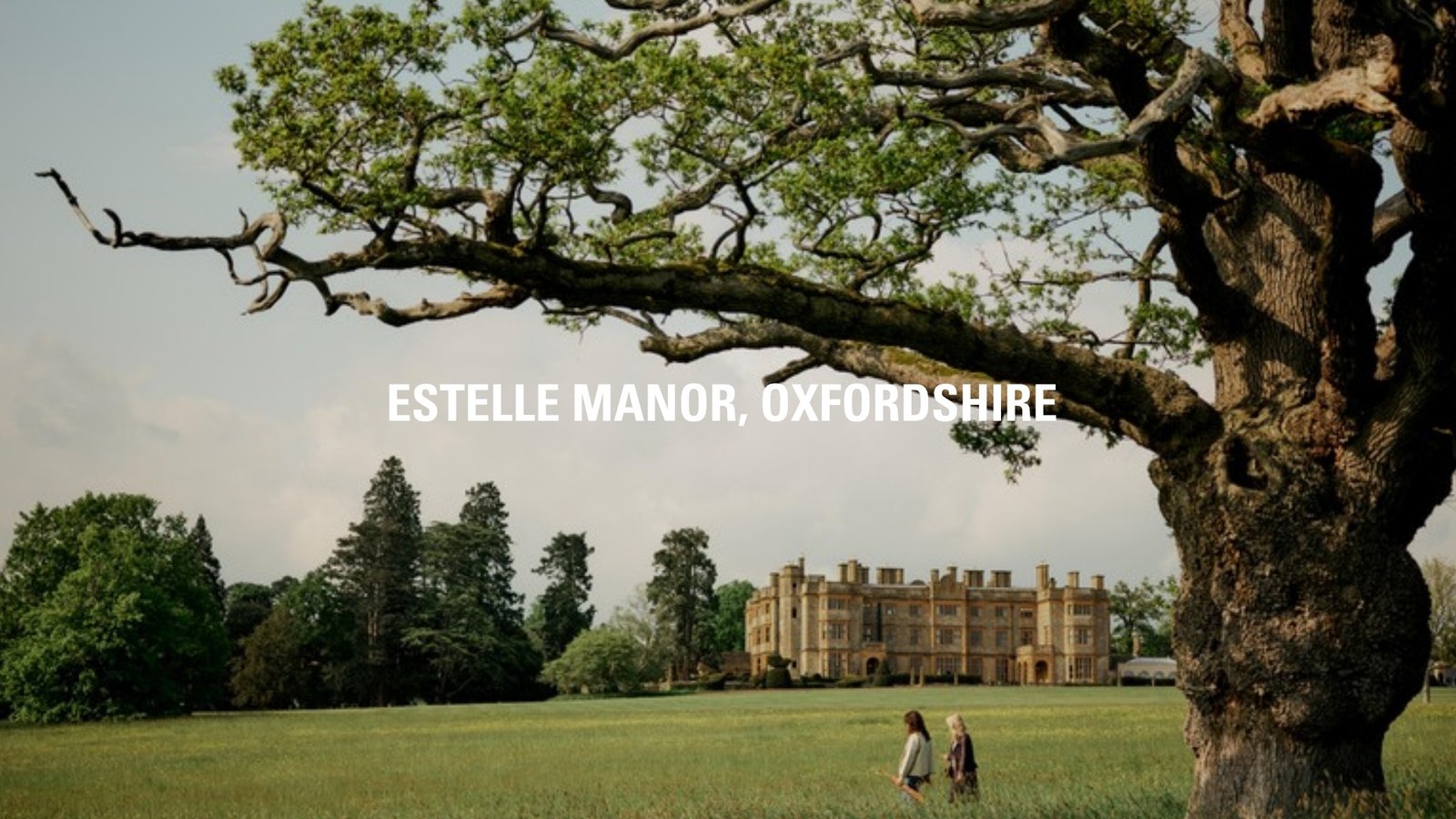
Estelle Manor · Oxfordshire
Opened 2022 · Oxfordshire, United Kingdom · Annual membership approximately £3,750 plus joining fee.
The most valuable members clubs in this Index are in New York and Mayfair. Estelle Manor is in a field in Oxfordshire. That fact is worth examining. Positioned within the established London-Cotswolds corridor, it serves a highly mobile membership that increasingly divides its time between urban business centres and rural lifestyle destinations.
Rather than operating as a standalone country estate, Estelle Manor forms part of a broader membership ecosystem alongside Maison Estelle and Celeste in London — allowing members to remain connected across multiple locations. That integration significantly strengthens the value of the network while reinforcing demand across each property. Its extensive wellness facilities and hospitality offering are not simply amenities but infrastructure supporting long-term engagement with the membership community.
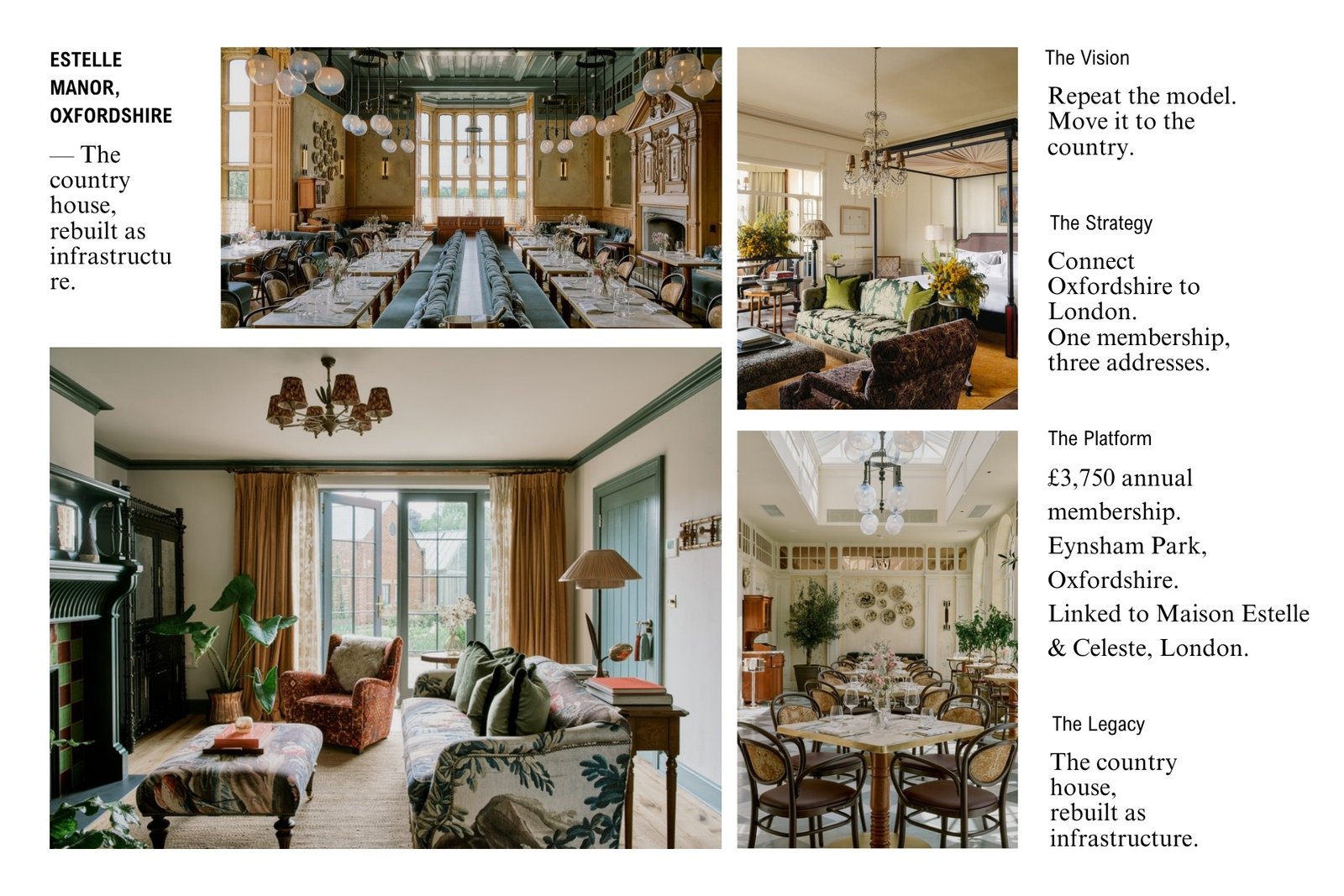
Estelle Manor, Eynsham Park, Oxfordshire — the country house, rebuilt as infrastructure.
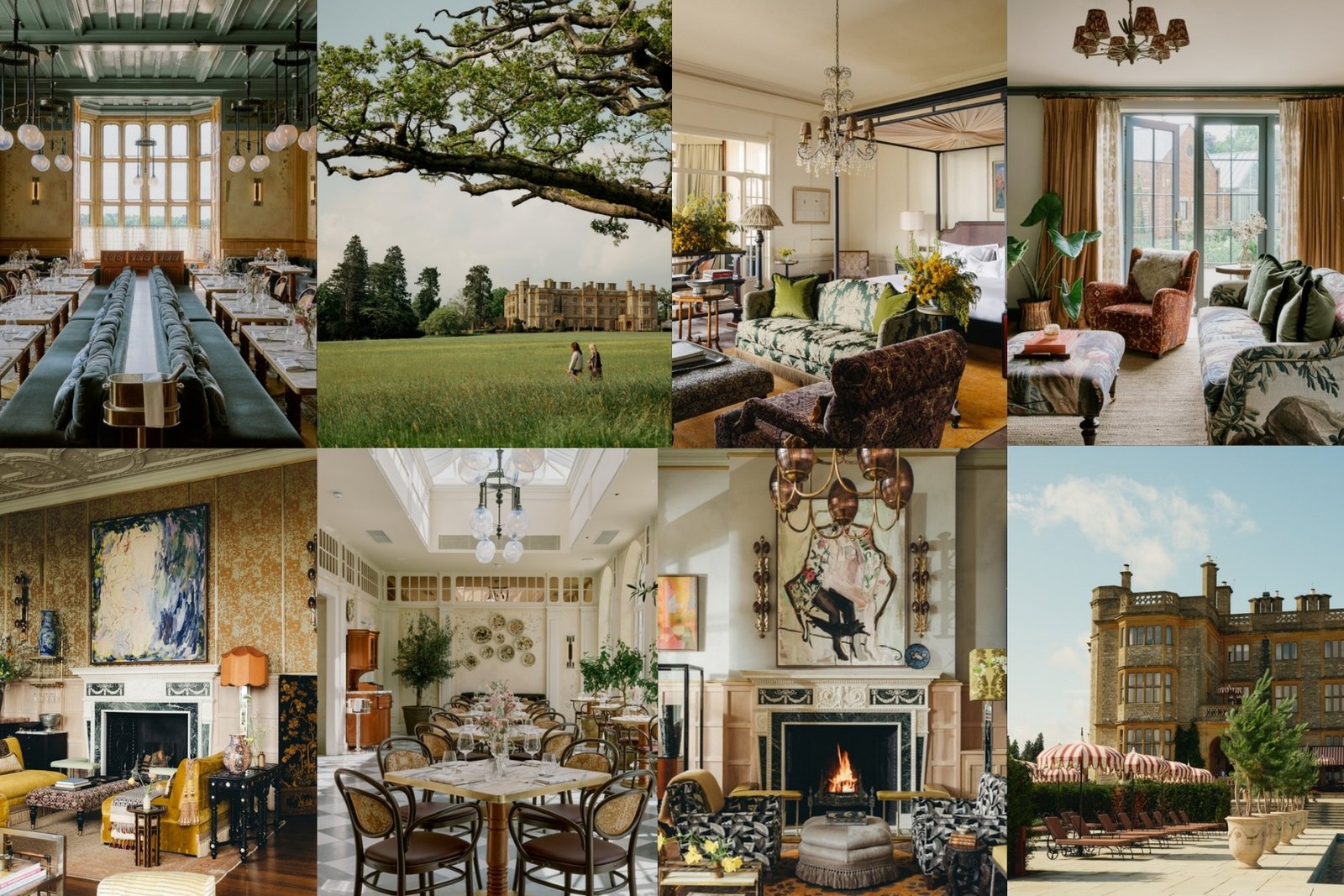
The estate also contributes to the continued desirability of one of the United Kingdom’s most valuable rural residential markets — illustrating that carefully curated hospitality can influence pricing beyond major global cities. Estelle Manor concludes this Index by demonstrating that the principles underpinning the world’s most strategically significant members clubs — network density, real estate impact and capital signalling — are not confined to urban skyscrapers or historic city clubs. When the surrounding ecosystem is sufficiently strong, they can reshape rural markets just as effectively.
What the Index reveals. The ten clubs in this Index share almost nothing in terms of design, heritage, price or geography. They share everything in terms of what they do to the real estate around them. Three patterns emerge. The most strategically significant clubs are clustered within a small number of locations — New York, London and a handful of global lifestyle destinations. This is not coincidence. Network density depends on the physical concentration of people actively deploying capital. When clubs expand into Dubai, Bangkok or Washington DC they are not simply growing their hospitality footprint. They are identifying where ultra-high-net-worth capital is becoming multi-polar before the wider market recognises it. The strongest capital signals increasingly come from organisations with the smallest memberships and the highest barriers to entry. Soho House remains the largest members club platform in the world. Aman Club, Core Club and Zero Bond are a fraction of its size — and considerably more significant as capital indicators. Scarcity has become a competitive advantage. The most valuable clubs are no longer those with the most members but those with the highest concentration of people capable of influencing investment, development and capital formation. The strongest clubs no longer operate as standalone hospitality businesses. They sit within branded residences, mixed-use developments and broader luxury platforms where membership reinforces residential demand and ownership strengthens the network. Access has become part of the asset itself. Viewed together, these patterns confirm that members clubs should no longer be understood primarily as lifestyle brands. They have become signals of where wealth is concentrating, where cities are being repriced and where the next generation of global investment is already taking shape.
The investment implication. The members club has become one of the clearest capital signals in global real estate. When Aman integrates a members club into a branded residence, when The Arts Club expands alongside established wealth corridors, when Gulf capital acquires Annabel’s as part of a broader luxury platform — these are not isolated hospitality announcements. They are indicators of how capital is repositioning across cities, neighbourhoods and asset classes. The opportunity rarely lies in the clubs themselves. Most are private, tightly controlled and unavailable as standalone investments. The greater opportunity lies in identifying the real estate, mixed-use developments and branded residential projects that surround them — before the wider market prices in their presence. By the time a members club opens its doors, the strongest investment decisions have often already been made.
Edition Insider tracks these signals every week — the transactions, expansions and capital movements that connect individual announcements to the broader themes reshaping global real estate and hospitality. The access is the intelligence. The intelligence is the advantage.

Read Edition Insider: Every week Nicholas publishes Edition Insider — a private intelligence briefing on global real estate, hospitality and capital. Written for developers, investors and operators who want to understand where the market is going before it gets there. Founding membership is open until August 30th. $497 per year. Locked for life.
To work with Nicholas directly — partnerships, advisory, brand strategy or editorial enquiries. [EMAIL]:nicholas@edition-x.com