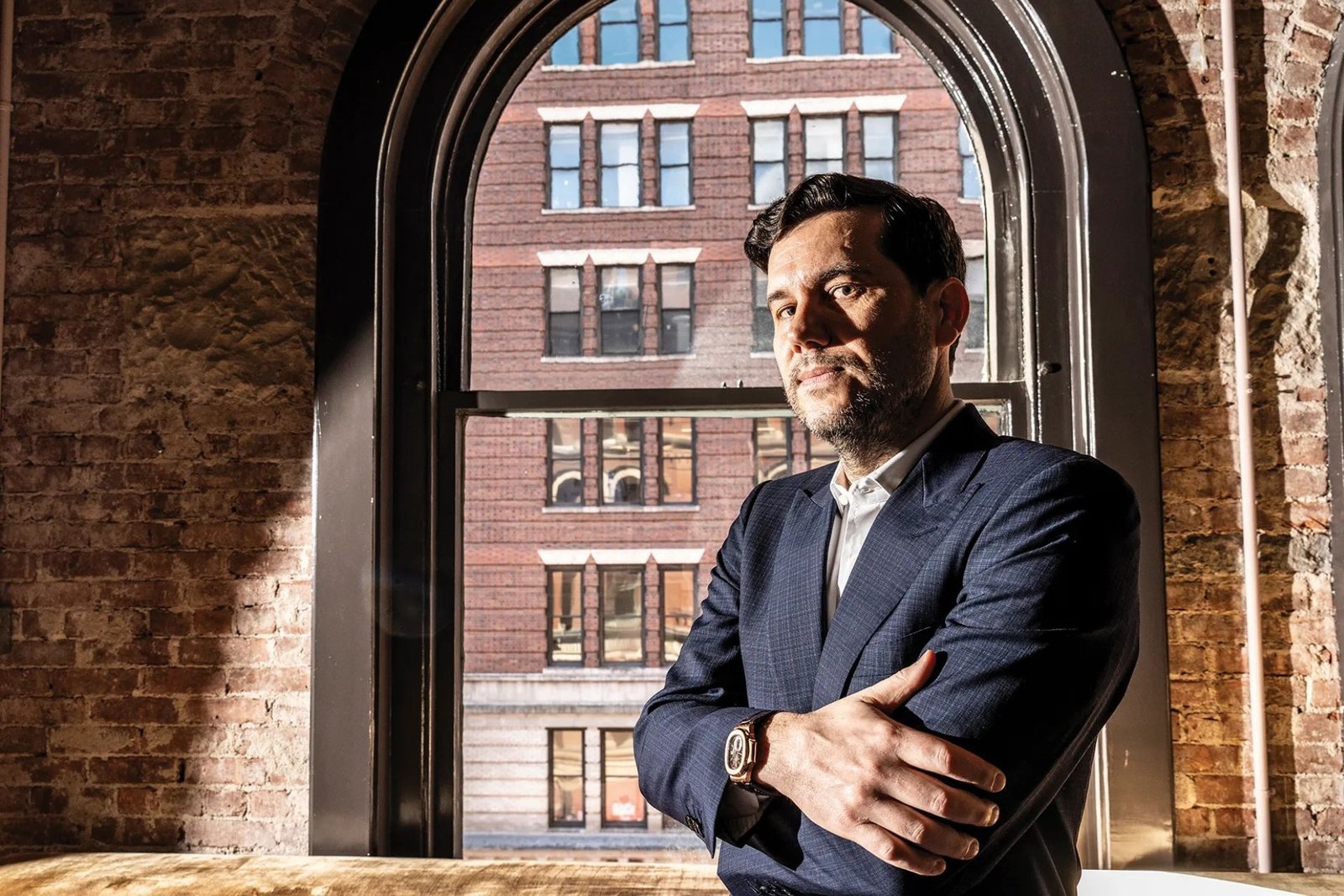



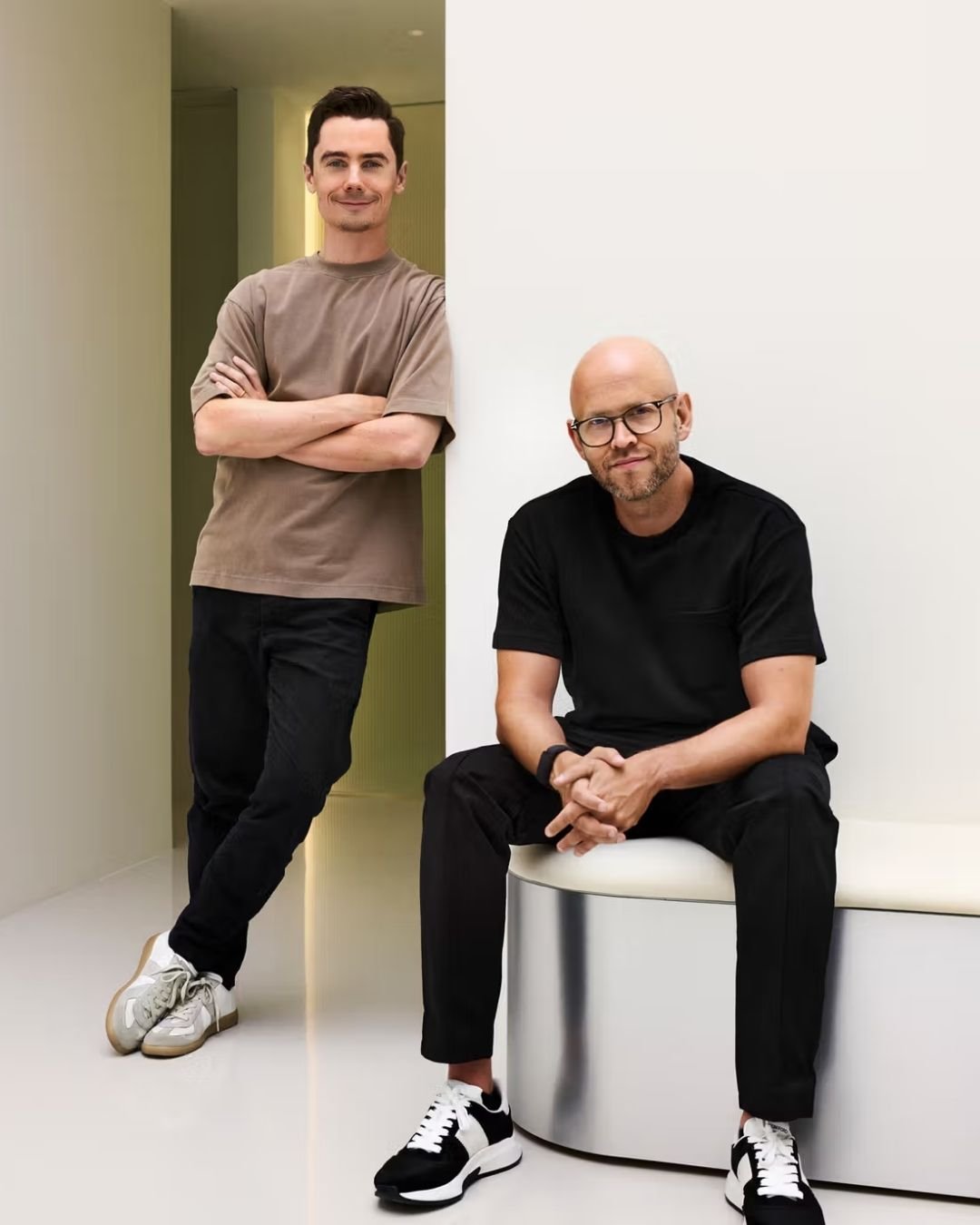






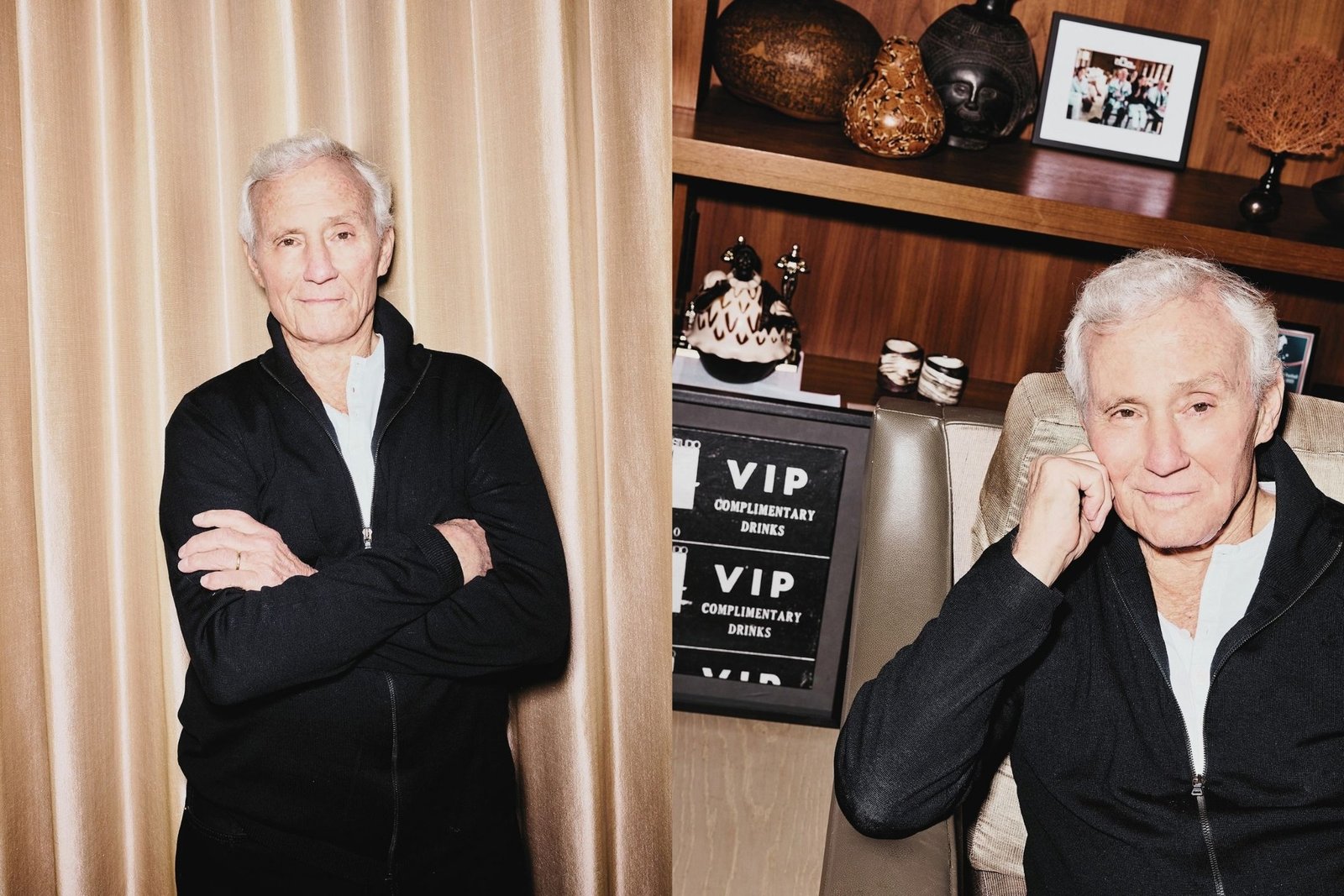


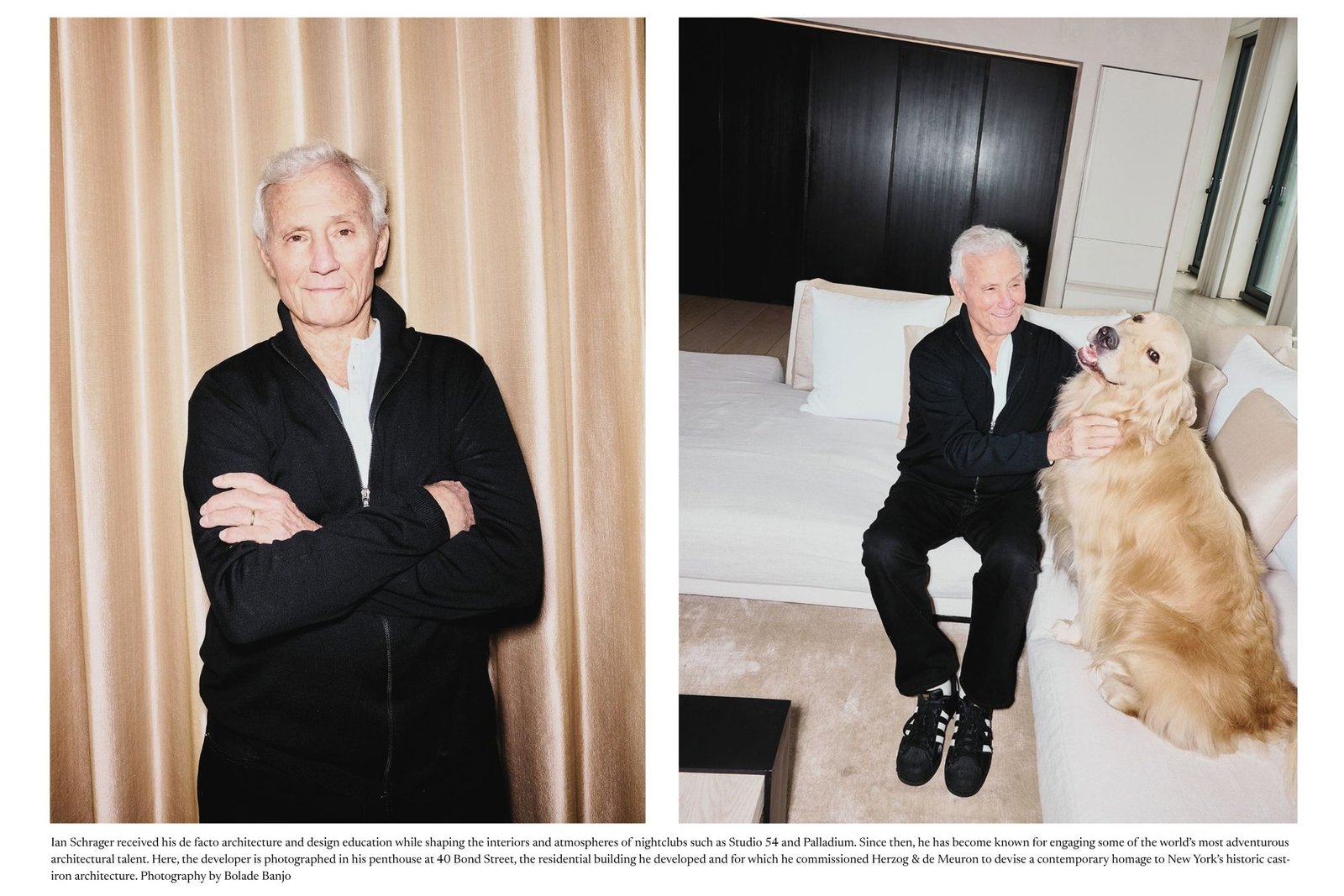
From Studio 54 to the boutique hotel, Ian Schrager has spent five decades challenging convention. In conversation with EDITION Editor-in-Chief Nicholas Meimaris, the hospitality visionary reflects on Steve Rubell, the cultural forces behind Studio 54, his collaborations with Philippe Starck and Arata Isozaki, and why the most enduring ideas often begin by breaking the rules.
There are few figures who have changed the way we understand hospitality as fundamentally as Ian Schrager. You might know him as the co-creator, alongside Steve Rubell, of Studio 54 and Palladium, two of the most influential nightclubs in New York history. Or as the pioneer of the boutique hotel — a category he helped invent and that permanently altered the relationship between design, culture and hospitality.
But Schrager’s influence extends beyond any single project. His career has been defined by an instinct for identifying people and ideas before they become obvious: Andrée Putman at Morgans, Arata Isozaki at Palladium, Philippe Starck across a series of hotels, and later Herzog & de Meuron and John Pawson. For Schrager, design has never simply been about how something looks. It is about how it makes people feel, how they behave inside it and, ultimately, whether it creates something people want to be part of.
His education began not in design school but in law. Studio 54 became his laboratory — a place where music, art, fashion, celebrity, nightlife and architecture collided. It was there that he learned the power of atmosphere and the importance of creating environments that could not simply be consumed but had to be experienced. Almost five decades later, that instinct remains intact.
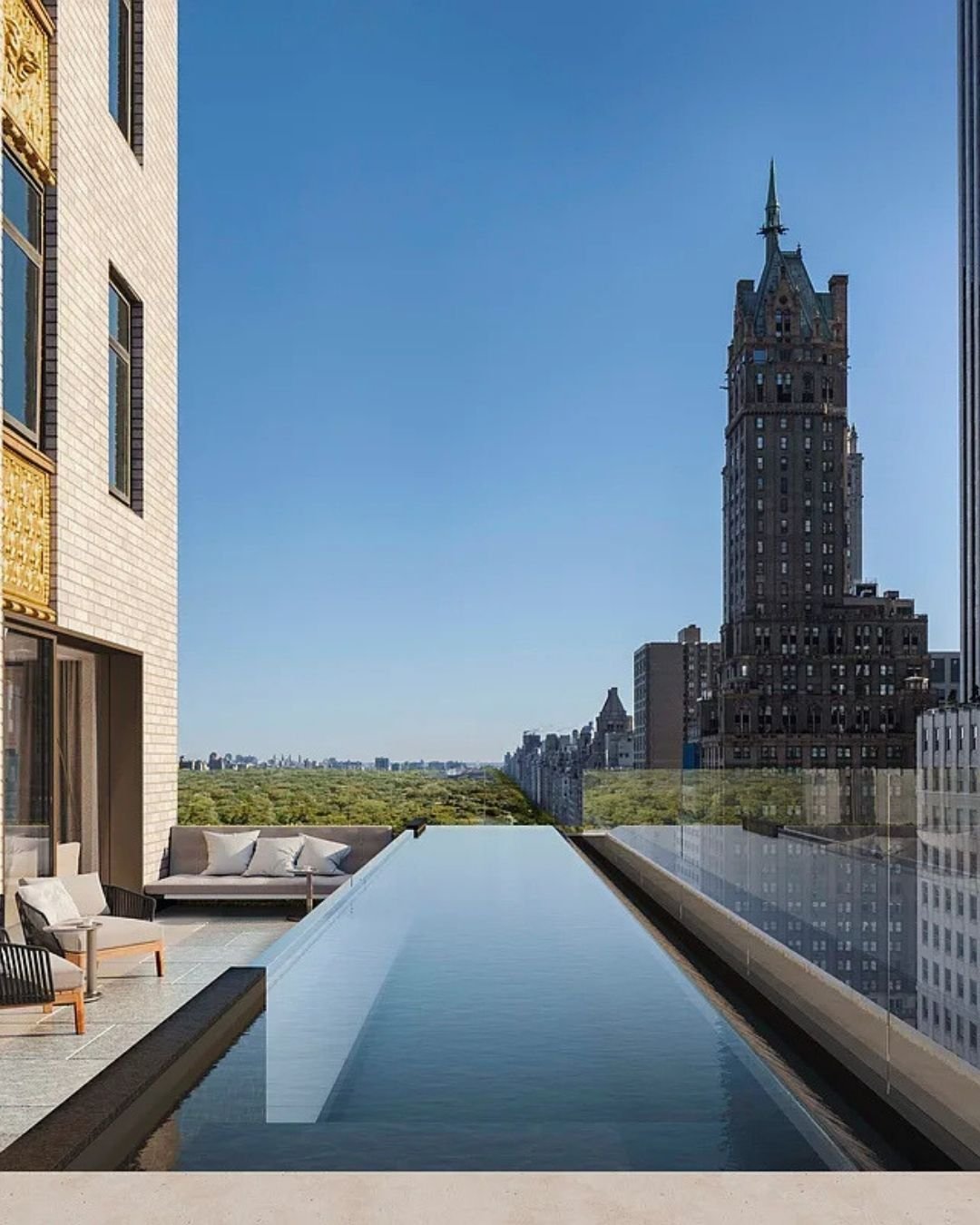
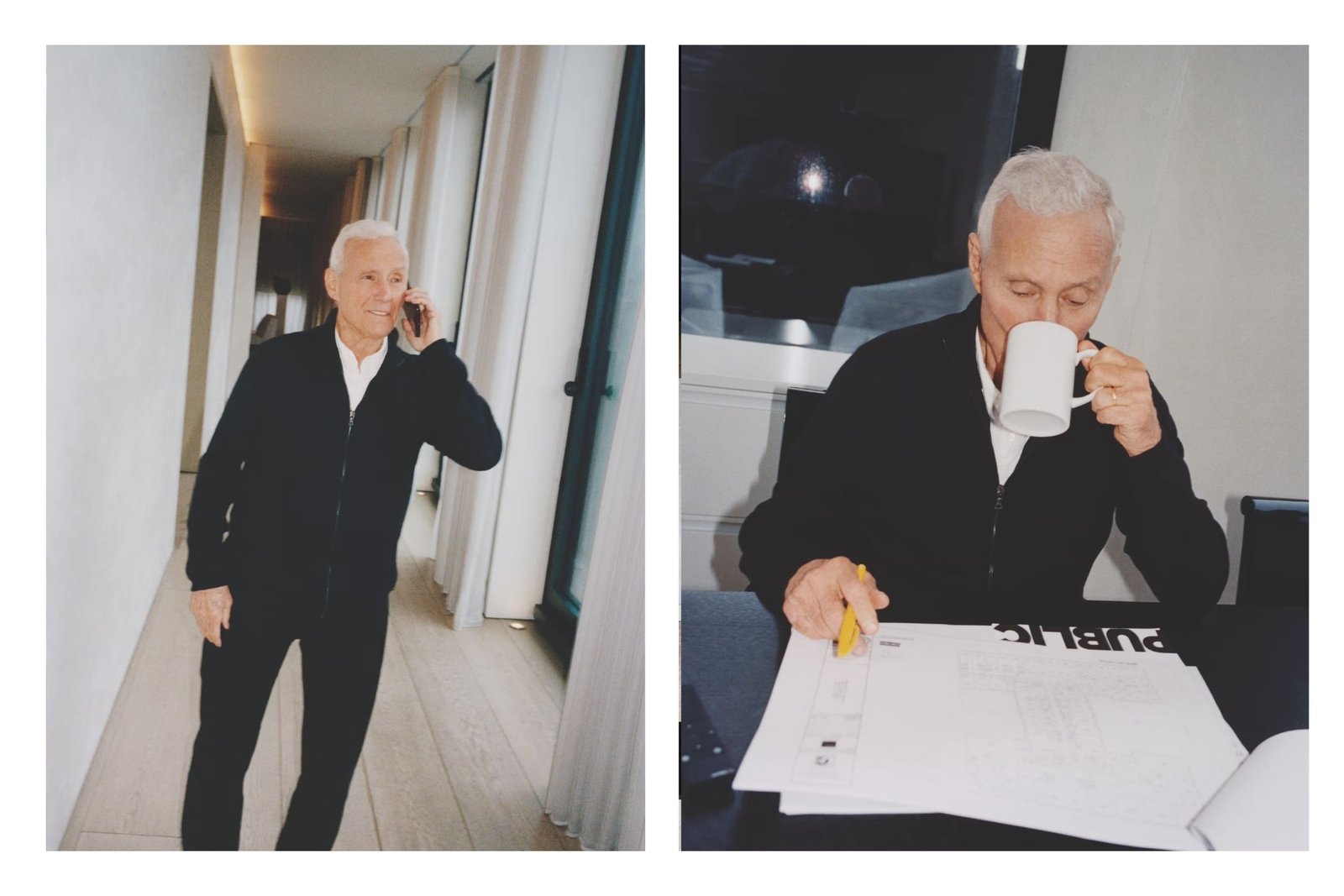
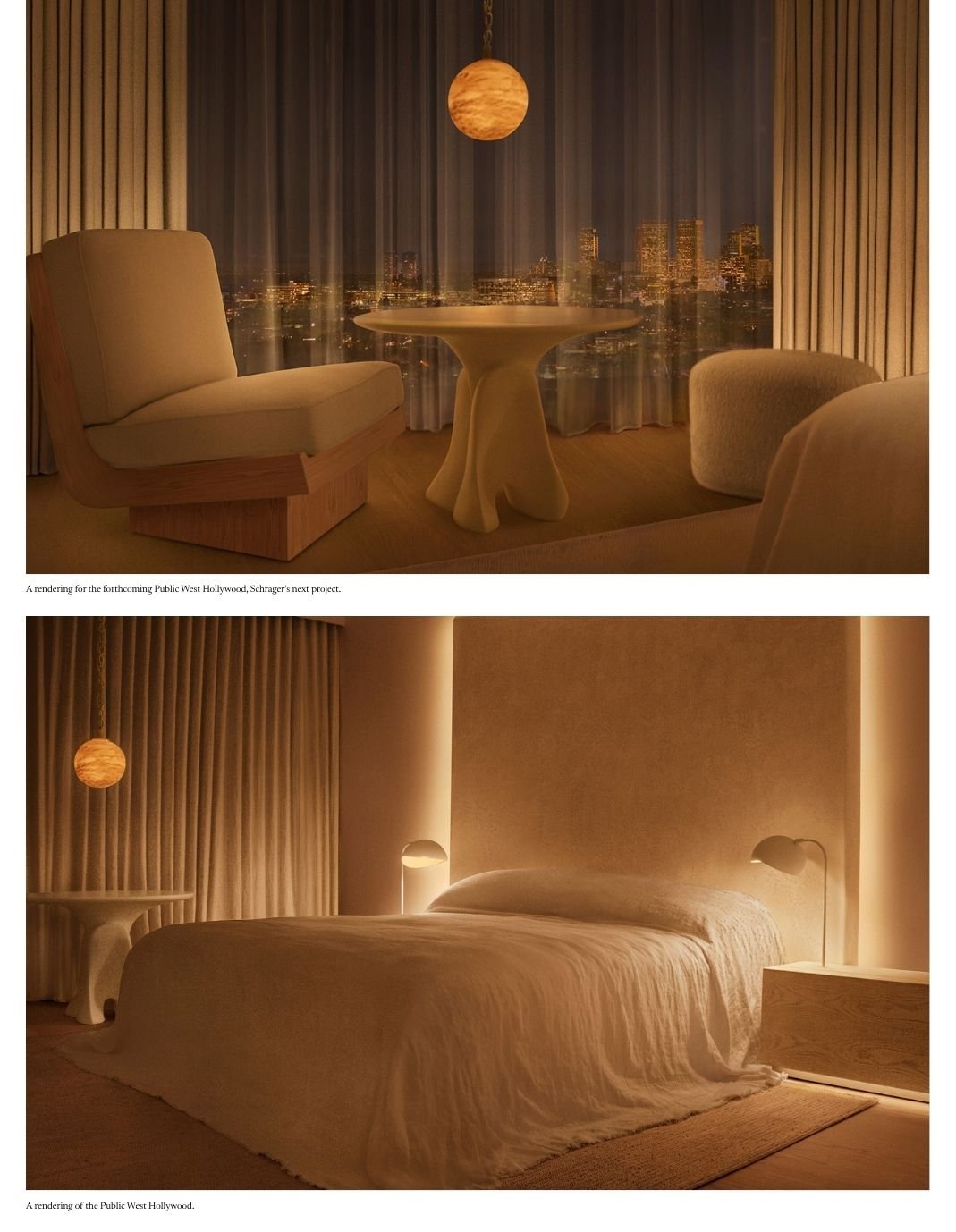
His latest project, PUBLIC West Hollywood, brings him back to Sunset Boulevard, with a 137-room hotel designed by John Pawson, a substantial landscaped rooftop and a new nightclub illuminated by artist James Turrell. At 80, Schrager is still doing what he has always done: looking for the next idea.
Nicholas Meimaris: You have described Studio 54 as a kind of design school — a living experiment in spectacle, atmosphere and crowd psychology. Looking back, how much of what happened there was intentional and how much was simply instinct?
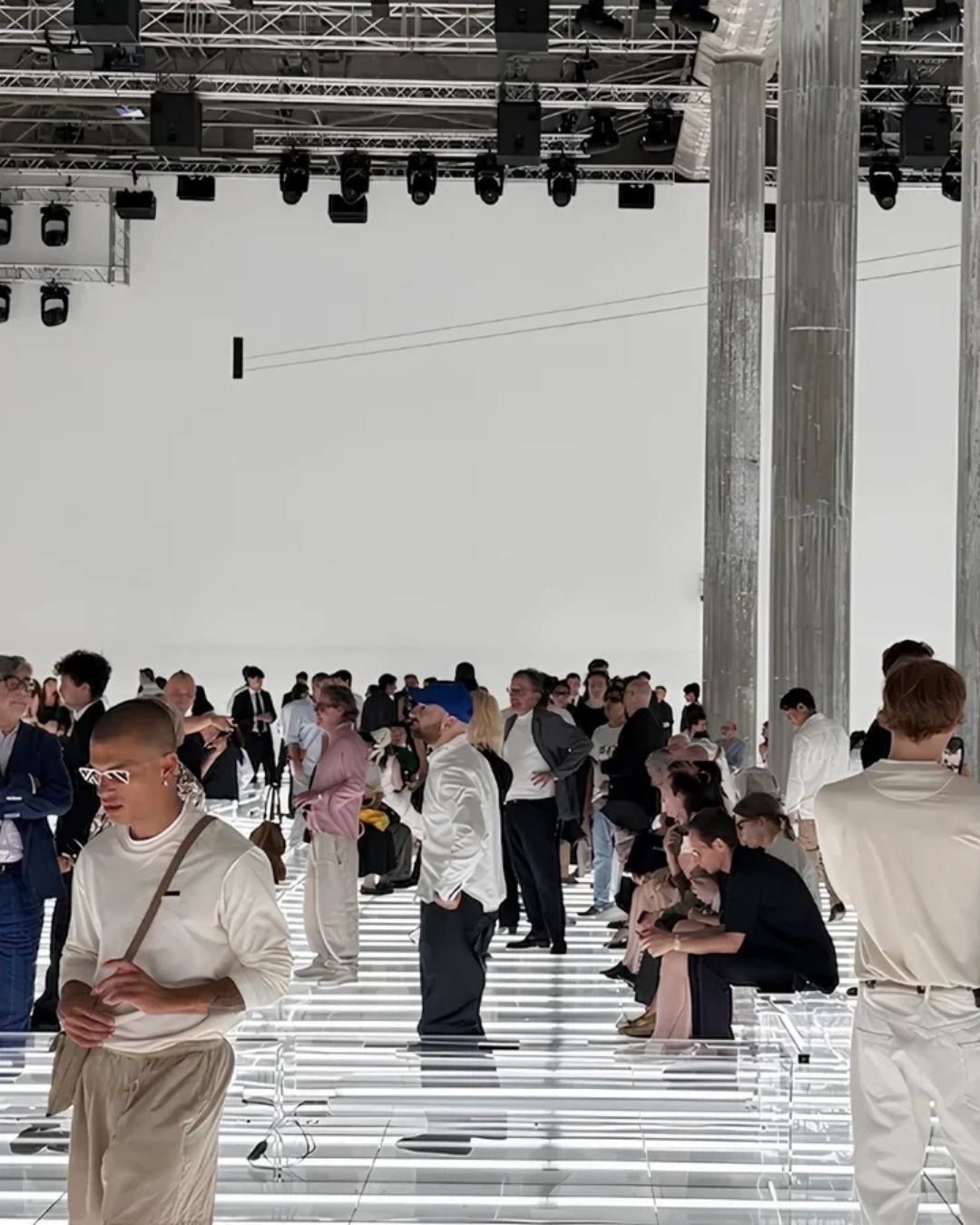
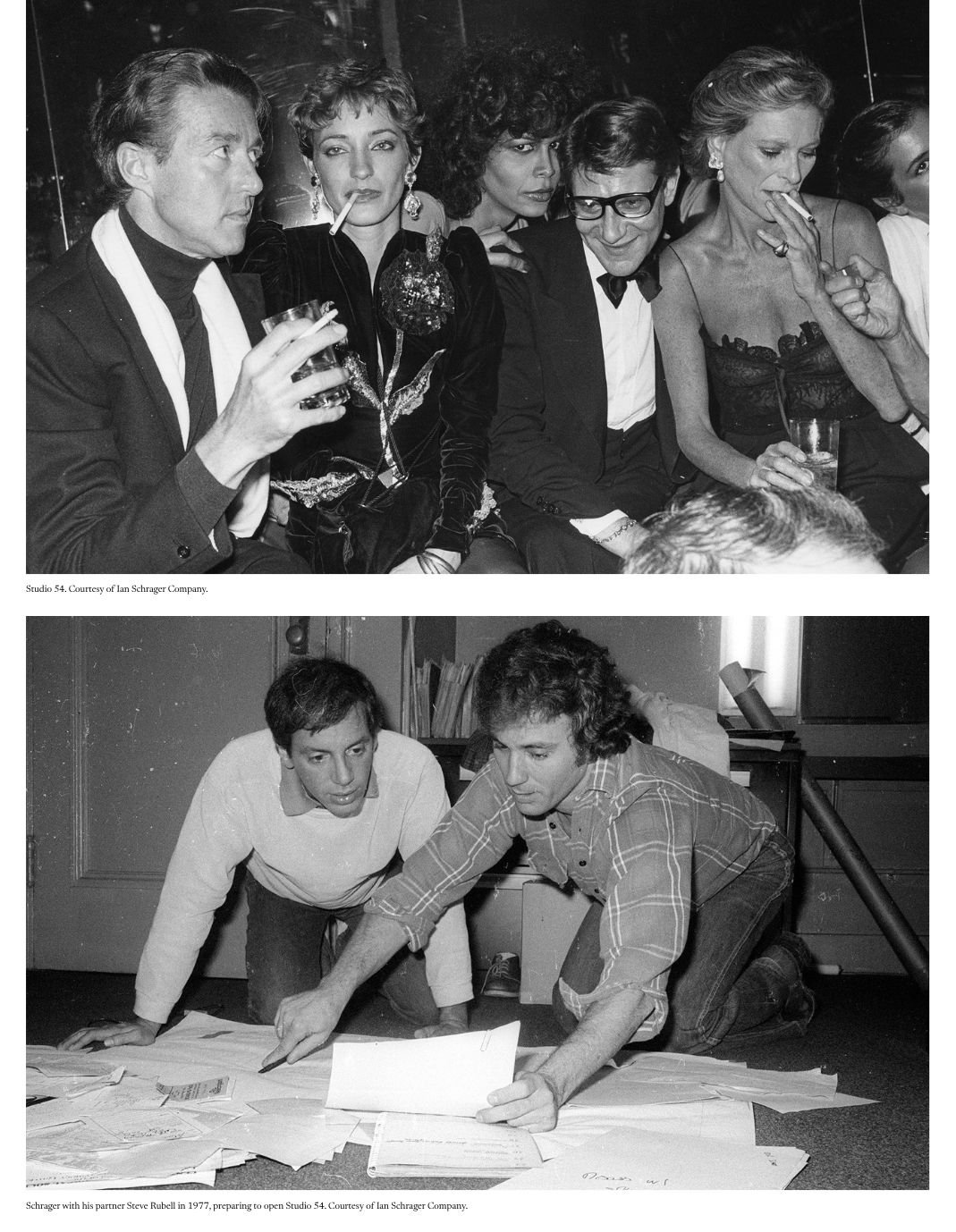
Ian Schrager: A lot of accidents, a lot of intention. Like life. You have to remember that the nightclub business was in its early phase of development. The baby-boomer generation graduated college, came back to New York and wanted to socialise. The first big nightclub was this place called Cheetah, on Broadway and 53rd Street. That period was really the birth of the dance club. There was nothing like it before. In that era, you went to a bar to meet people. There was no dancing, no revelry, except in gay nightclubs, which went from being hidden away to emerging into the open. This was before Paradise Garage, but there was the Flamingo. The energy was so palpable in those clubs — it was infectious. You would have maybe 1,000 people on the dancefloor, moving like one organism — sweaty, dancing with abandon. I never saw anything like it.
The partnership with Steve Rubell was central to all of this. You have described it almost as a marriage. What made that relationship work?
Working with Steve was a magical experience for me. We were really great friends. We loved each other. It’s funny because we were both raised and born in Brooklyn. I suppose we both felt we had something to prove. As kids, we lived very close to each other, but because he was in a different school district, I didn’t know him. I went up to Syracuse when he was studying there. I was a freshman and he was a senior. We were vying for the attention of the same girl, and I think because we both dealt with each other in a very respectful way about it, we became good friends. It was almost instant. I think sometimes that happens when there’s a fundamental sharing of values and purpose in life. We were both very ambitious and sensitive. I was very sensitive. Steve was an extrovert, and I’m an introvert. I went to law school, not because I wanted to be a lawyer, but because I didn’t know what I wanted to do. When I graduated and started practising, I became Steve’s lawyer on a $1,000-a-month retainer. I started getting involved in his steak business.
So the beginnings were much more entrepreneurial than glamorous.
Absolutely. It was a real seat-of-the-pants entrepreneurial operation. We started in the restaurant business.
And then nightlife became the laboratory.
Yes.
One of the most interesting things about Studio 54 is that the audience itself became part of the spectacle. The line between performer and spectator was deliberately blurred. Was that something you were consciously designing?
A lot of it was instinctive. Steve was an extrovert and I was an introvert, so the division of responsibility happened quite naturally. I remember that the first night the place opened, Steve went to deal with the kids at the front door and I went to the DJ to play with the lights. Steve always used to say that he knew when I was playing the lights because they were right on beat with the music.
Where did that instinct for atmosphere come from?
Probably out of necessity. It was instinctive, not business. My parents threw great parties and had great taste. Even though we lived in a modest home, it was always tastefully done — simple. I remember the living room had a gold carpet, gold couch, black furniture and white walls. My father was a great dresser, very fastidious — shirt, cufflinks, the socks, the whole bit. They planned my bar mitzvah so well — it was perfectly over the top — that people would come over to the house and just rave about it even years later. I guess all of that had an impact on me.
Studio 54 emerged at a particular cultural moment. New York was changing, nightlife was changing and gay culture was becoming increasingly visible. How conscious were you of the cultural forces surrounding what you were creating?
You have to remember that most of my friends were gay because the gay people in Manhattan were setting the tone of what was going on culturally — in fashion, music, everything. You can’t exactly figure out why that group of people became so creative and had such an impact on things. Maybe it was because they were just finally spreading their wings. I don’t know.
What you created gave people a place where they could feel completely free.
That’s what everybody does. Every creative person does what they like, and you happen to feel lucky if there are other people out there who also like it. But success is the wind at your back, and you either get expanded by it and grow, or get destroyed by it. I used to say we got intoxicated by the great success we had because we didn’t think we could do anything wrong. That’s how we made these really stupid errors, like not paying our income tax. You have to remember, we were just two guys from Brooklyn. With Studio 54, we were trying to get the best people around — the tastemakers, the people in the know. It had nothing to do with wealth. If you had the best people, you had the best club. That split-second spontaneous decision at the front door got a lot of people pissed off. But we wanted people to be able to walk around and feel totally protected. It was part of that freedom that we were trying to get to.
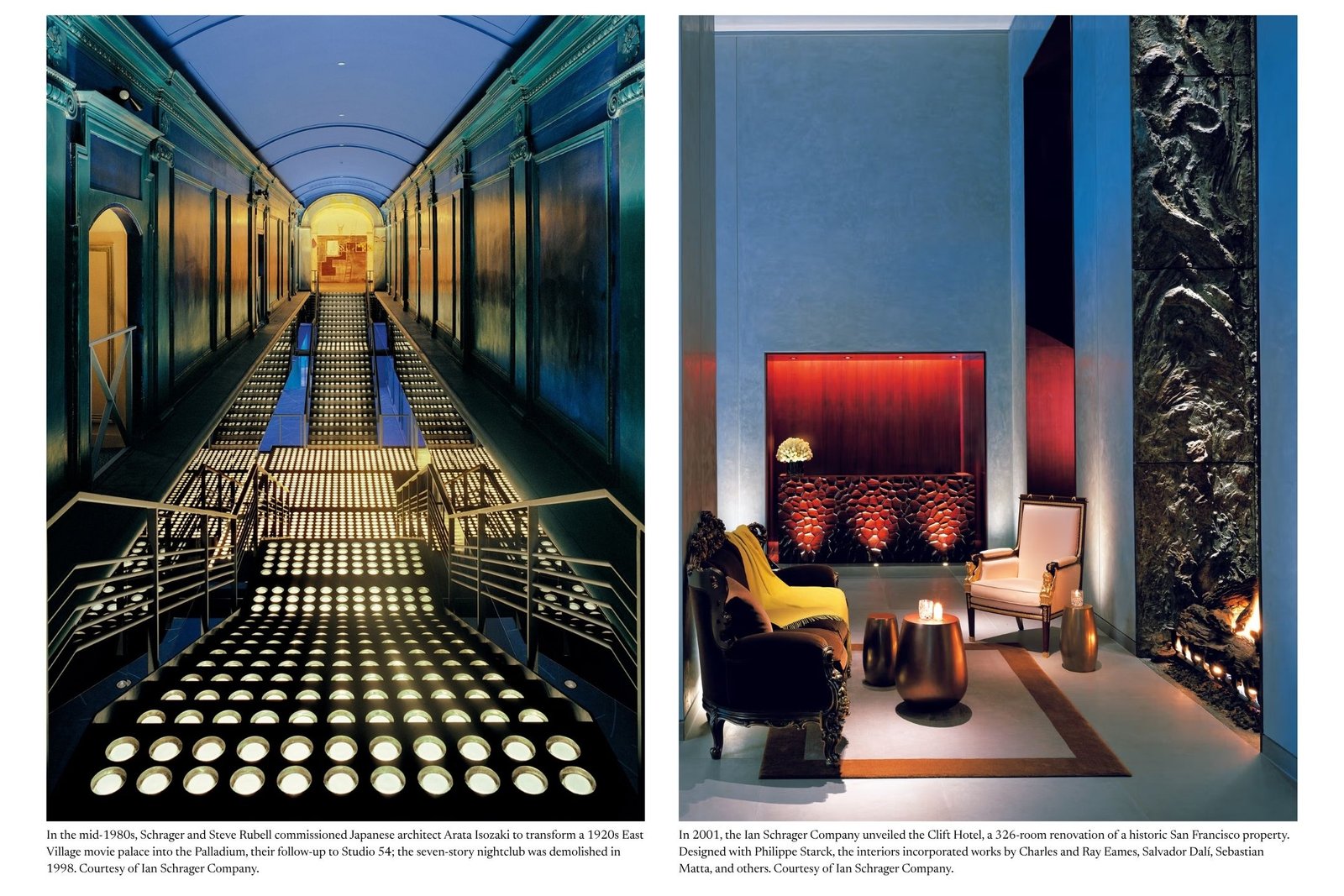
You followed Studio 54 with Palladium, but instead of simply repeating the formula, you brought in Arata Isozaki and some of the most important artists of the era. What were you trying to achieve?
I was competing with Studio 54, and Studio 54 was an original idea. Palladium was not. Palladium was just more of it. In order to surpass what we did before, I went to what I considered the best architect in the world, who didn’t speak English, by the way. I loved design and architecture. I got into design and architecture because that was my job, that’s what I was doing. I saw Isozaki’s work in a magazine, and I thought it was really great. I’ve always worked with designers from Europe, from Asia, and people thought I was absolutely crazy. Nobody else would hire them. But by definition that was going to give me a fresh look, because they were not the usual suspects.
What did you tell Isozaki when you commissioned him?
I remember calling him in Tokyo from New York, in the middle of the night, because it was 13 hours ahead there. I told him I thought that a nightclub was more about architecture and design than anything else, because you have nothing but the architecture and design. There’s a certain magic to a nightclub. Something comes on, whips the crowd up, and then disappears as fast as it appeared. You can’t stop the party, because then you run the risk of not being able to start it up again. You’ve got what everybody else has — same music, same liquor. There’s no product being sold there other than the architecture and the feeling that it creates. I think that appealed to him. He was a little bit of a rebel himself, so he liked the idea.
The project also became an extraordinary experiment in bringing contemporary art into nightlife.
I hired Henry Geldzahler, a curator at the Met Museum, as the art adviser. I had to have somebody with credibility, because I was a nightclub guy going to these artists. I didn’t want paintings to hang on the wall. I wanted something immersive that would be part of it. I remembered when the fashion designers were it. Then the rock stars, then the athletes. This was when artists held the Zeitgeist, and we thought incorporating and integrating art into the club was something that would give it another dimension. Street credibility.
And you gave each artist their own environment.
Yes. I gave each artist an area. We used Basquiat up in the Michael Todd room, which was an old peeling-paint space with a steel girder running through it. I think the Keith Haring mural above the dancefloor was one of the best things he ever did.
Around the same period, you were beginning to reinvent the hotel. What made Andrée Putman the right person for Morgans?
She had incredible taste. I remember reading a story about her in The New York Times. She came from the fashion world, towards which I had a natural affinity. Andrée had worked for Karl Lagerfeld and Yves Saint Laurent, and if there were any certified tastemakers in the world, it was those two. That’s what attracted me.
She had never done a project in the United States.
Definitely not. She’d never done any projects in the U.S. before.
So again, you were deliberately going outside the established system.
Yes. I didn’t want it to look like any hotel that had ever been done before. I wanted to break all the rules. I wasn’t interested in coming up with practical, indestructible finishes that would withstand abuse. I wanted people to feel that they were walking into a private home. For instance, we had solid carpets that would show stains. Okay, so I have to change the carpet a couple times a year, but you’ll make it up in occupancy rate, rather than having an ugly carpet with a pattern that is the stain. It’s a ridiculous decision for a capitalist. You have to assume it makes economic sense because, if it’s not successful, you won’t have a chance to do it again. We didn’t even have a liquor licence at that point. We had no food. When people used to order room service, we had to run across the street to the delicatessen, pick up the food, bring it over to the hotel, take it out of the grocery wrapper, put it on a tray and take it upstairs. But there was an energy to it. You know when you’re involved in something special.
Looking across your career, there is a recurring pattern. Isozaki at Palladium, Putman at Morgans: you identify people before they become obvious choices and give them an environment in which to do something unexpected. Is that a form of cultural scouting?
I think you have to look for people who are great. You can’t always know where they’re going to go. But when you see something that’s really good, you recognise it.
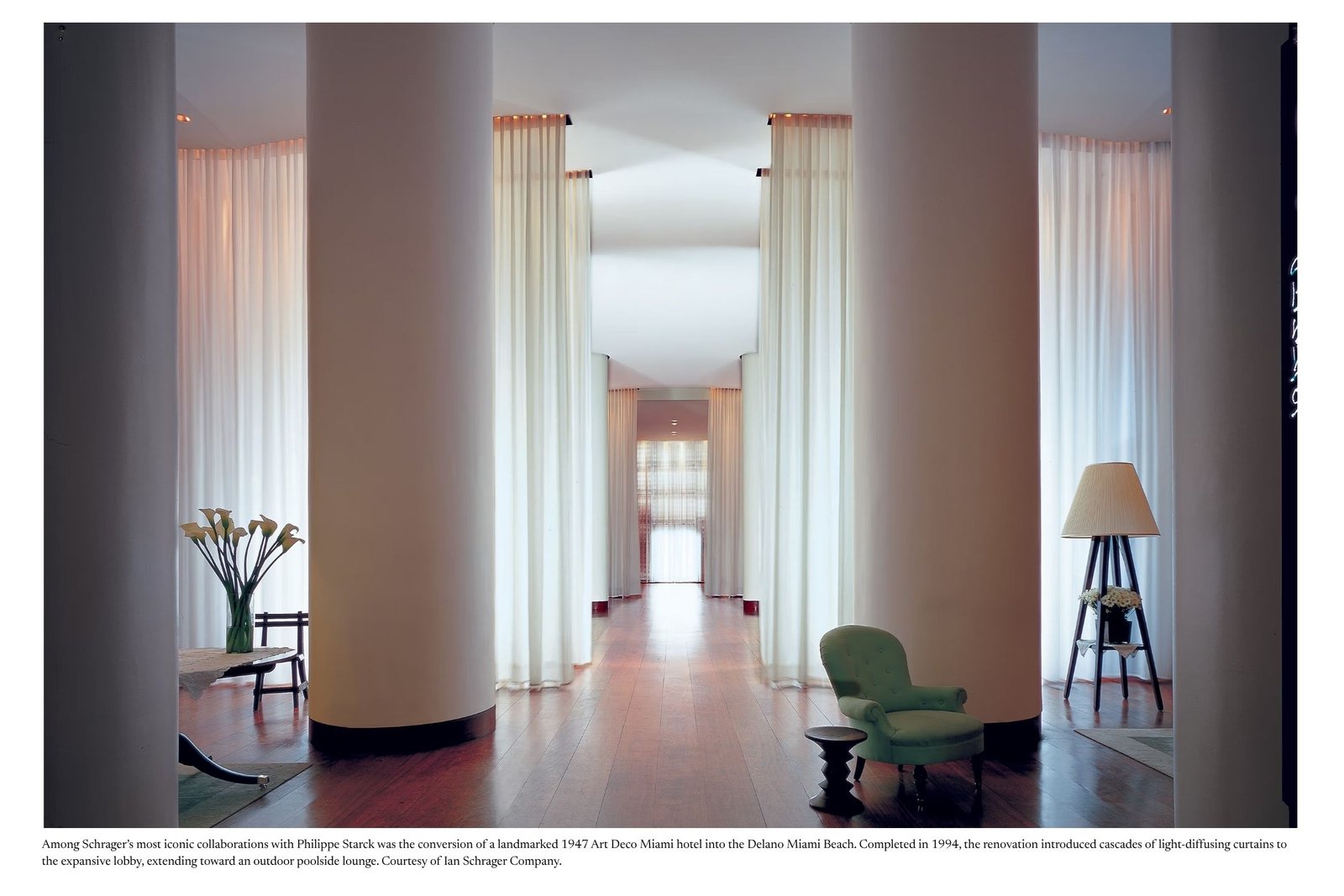
After Morgans, you began one of the longest collaborations of your career with Philippe Starck. Together you developed an aesthetic that mixed elegance, Surrealism, humour and a certain kind of magic. What did you recognise in him?
Philippe is brilliant. If I ever worked with a genius, it was him. He had a million ideas. And I liked his personality. He’s funny. He enjoys life. Because he’s so undisciplined, I used to get plans from him on toilet paper. I knew I wanted to work with him when I saw the bathroom he did in a Paris restaurant called Café Costes. It was a complete reinvention of how you relieve yourself. There was a see-through glass faucet, so you actually saw the water running before it came down. It was a bathroom that you needed instructions on how to use. It was quirky, original and theatrical. It made people smile. When people went in, they knew it was a new kind of space. So I thought, “Okay, if he can reinvent the bathroom, he could easily reinvent the hotel room.” From him, I learned to have wit and humour, irony and irreverence in design. That anything’s possible.
You and Starck developed a philosophy around subverting expectations. Is that the central idea that runs through your work?
Subversion of the status quo is essential. Make sure you don’t go too far, make sure you don’t put off the customer, but always subvert the status quo. If there’s one thing that runs through every project I’ve done, it’s that.
You carried that thinking into residential projects as well. What happened when you worked with Herzog & de Meuron on 40 Bond Street?
They were really put in a box with that one because the zoning laws didn’t allow them to do anything they wanted. Where the shell was concerned, all they could really contribute was the façade. I wanted to do a kind of open living space that Frank Lloyd Wright invented, mostly lofts. I worked with them on the layouts. We decided we’d have no enclosed kitchens — good bathrooms and good kitchens done intelligently. Stylish. Christian Liaigre also worked on the project. And John Pawson. Can you imagine what a trio that is? I felt like a referee.
You’ve worked with designers who each have very recognisable identities. Yet your projects rarely feel like exercises in somebody else’s signature style. How do you manage that?
I don’t want anybody to come into a project of mine and be able to label it. I want the simplicity that comes out of minimalism, but I don’t want minimalism. To me, simple is always better.
That sounds less like a design style than a design philosophy.
Exactly.
So what is challenging you now? After everything you’ve done, what is left to subvert?
I’m doing the new PUBLIC Hotel in West Hollywood on Sunset. It’s very colourful. The rooms are sophisticated, but in a very California way. No clichés. Very light, very airy. The whole roof is almost three-quarters of an acre, and we’re building a park on it, designed by my team with Madison Cox, who’s a great landscape person. I’ve worked with him for a long time. He’s not a corporate landscape person. He’s just a person with great taste who went into landscaping. John Pawson designed the building. He’s worked with me on a number of hotels to varying degrees — he consulted on the EDITIONs. It’s funny, because John Pawson is a minimalist, but I don’t go to him for minimalism.
Almost five decades after you were playing the lights at Studio 54, PUBLIC brings nightlife back into the equation. Will the new club break with everything you did before?
Yes. James Turrell is doing the lighting. There’ll be no blinking lights. It will be completely immersive — the ceiling, walls, floor in this beautiful saturated colour. We did blinking lights, then we did moving lights, but it’s different now. We need to keep moving forward.
About EDITION Profiles
EDITION Profiles feature exclusive interviews and editorial features with the developers, investors, operators, founders and advisors shaping the intersection of property, hospitality and capital. These are the people building businesses, deploying capital and shaping the markets EDITION covers.
Building something noteworthy? Looking to connect with the right people?
Whether you’re seeking introductions across our network or interested in sharing your story with the EDITION audience, we’d like to hear from you. For introductions, profile enquiries and editorial collaborations, contact EDITION Studio at es@edition-x.com or visit edition-x.studio to learn more.